
Shunt and drainage catheters
Neurosurgical catheters
Radiopaque silicone catheters with tantalum length marks, in six kits for shunt surgery and external lumbar drainage, each standard or antibiotic-impregnated.
What are neurosurgical catheters used for?
In hydrocephalus and CSF surgery, catheters carry cerebrospinal fluid: a ventricular or lumbar catheter takes it from the ventricles or the lumbar space, and a peritoneal catheter carries it to the abdominal cavity, or in external drainage it flows to a collection system. DESU catheters are radiopaque silicone with tantalum length marks, so their position can be followed under imaging.
The products
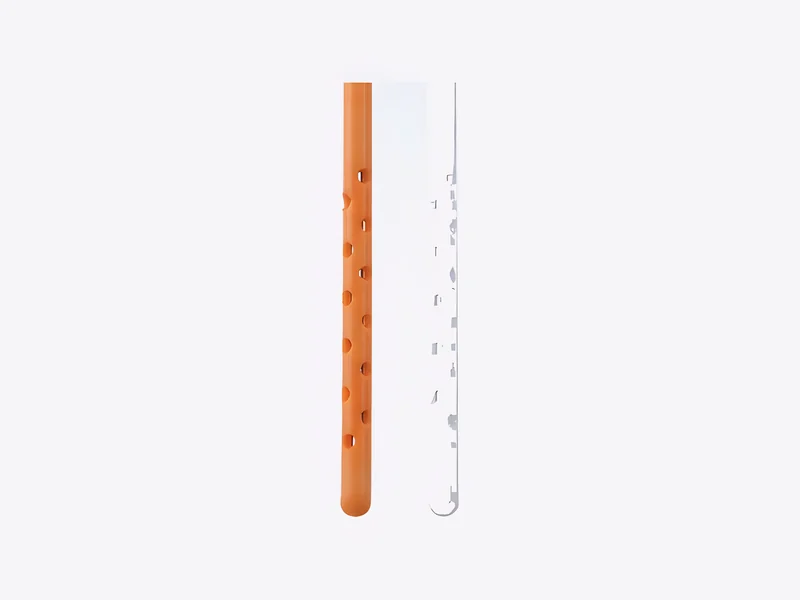 Ventricular Catheter KitRadiopaque silicone ventricular catheter with tantalum length marks from 5–15 cm and 24 drainage holes in four rows. Standard, or antibiotic-impregnated with 28-day controlled release.
 Peritoneal Catheter Kit120 cm silicone peritoneal catheter with tantalum length marks from 5–20 cm. Standard, or antibiotic-impregnated with 28-day controlled release.
 Ventriculoperitoneal Catheter KitVentricular and peritoneal silicone catheters in one kit, with tantalum length marks. Standard, or antibiotic-impregnated with 28-day controlled release.
 Lumbar Catheter Kit100 cm silicone lumbar shunt catheter with tantalum marks from 5–20 cm and 24 drainage holes in four rows. Standard and antibiotic-impregnated options.
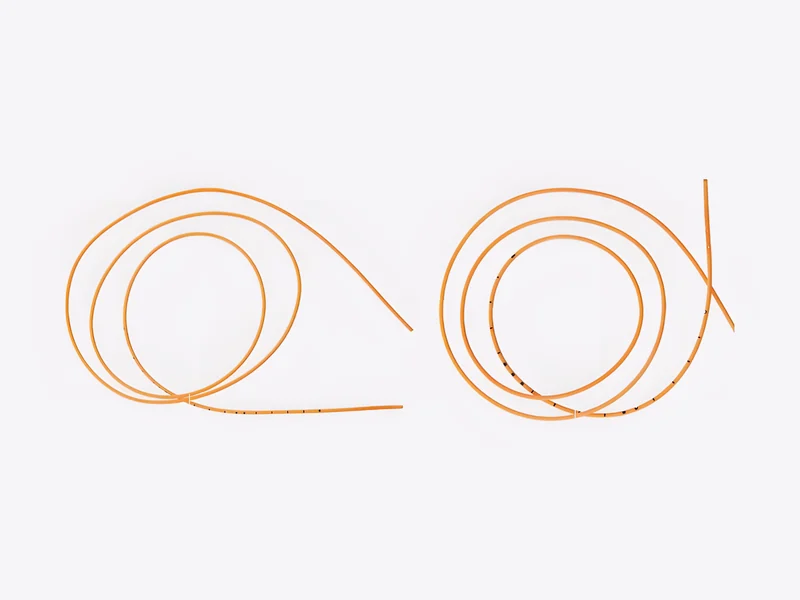 Lumboperitoneal Catheter KitLumboperitoneal kit with a 100 cm lumbar and a 120 cm peritoneal silicone catheter, with tantalum length marks. Standard and antibiotic-impregnated options.
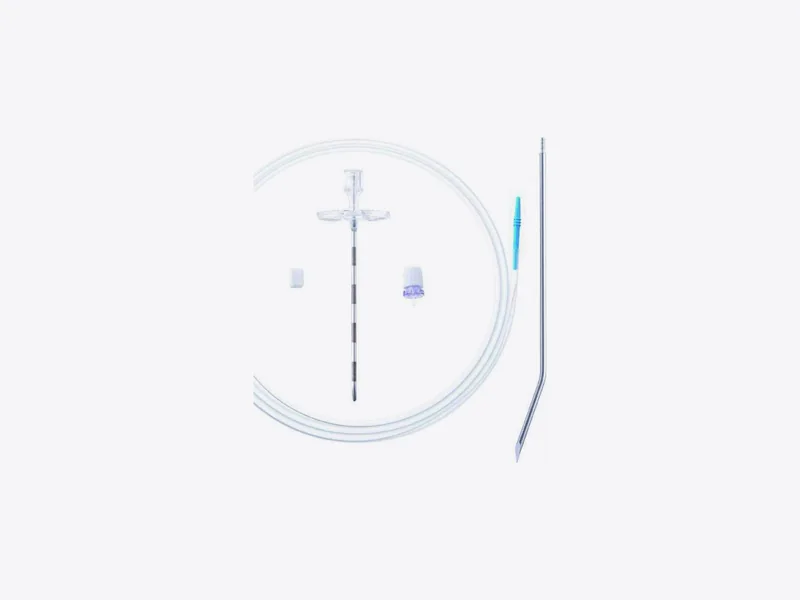 Lumbar Drainage Catheter Kit80 cm silicone catheter and application components for external lumbar drainage, with tantalum marks from 5–20 cm and 24 drainage holes. Standard and antibiotic-impregnated options.
Catheter dimensions
| Catheter | Inner diameter | Outer diameter | Length | Length marks | Drainage holes |
|---|---|---|---|---|---|
| Ventricular | 1.3 mm | 2.5 mm | 23 cm | 5–15 cm | 24 (4 × 6) |
| Peritoneal | 1.1 mm | 2.5 mm | 120 cm | 5–20 cm | 4 rows |
| Lumbar (shunt) | 0.8 mm | 1.6 mm | 100 cm | 5–20 cm | 24 (4 × 6) |
| Lumbar drainage | 0.8 mm | 1.6 mm | 80 cm | 5–20 cm | 24 (4 × 6) |
| EVD-010 ventricular | 1.5 mm | 3.0 mm | 31 cm | — | — |
Frequently asked questions
What are DESU catheters made of?
Silicone, with tantalum length marks that make the catheter radiopaque, so its position can be followed under imaging.
Which catheter kits are available?
Six kits: ventricular, peritoneal, ventriculoperitoneal (both catheters together), lumbar, lumboperitoneal (both catheters together) and the lumbar drainage catheter kit for external lumbar drainage.
What comes in the ventricular catheter kit?
The 23 cm ventricular catheter, a stylet and a right-angled connector. The proximal drainage zone of the catheter has 24 holes in four rows of six.
What comes in the lumbar catheter kit?
The 100 cm lumbar catheter, a 14 G Tuohy needle, a guidewire and a fixation part.
Are antibiotic-impregnated catheters available?
Yes, every catheter kit is offered standard or antibiotic-impregnated. The antibiotic is released in a controlled manner over 28 days; the dimensions are the same as the standard catheter.
Which connectors are used with the catheters?
Straight, L-type and Y-type catheter connectors: to join catheter parts, guide the catheter without kinking, or join two shunts to one peritoneal catheter.
Who manufactures these products?
DESU, a medical device manufacturer founded in 2007 as an R&D company at Hacettepe Teknokent, makes them in its own cleanrooms in Ankara, Türkiye. The products carry the CE mark and are made under an ISO 13485 quality management system; DESU exports to more than 50 countries.
Related articles
- NeurosurgeryNeurosurgical Catheter Glossary: Types and Terms Explained
- NeurosurgeryVentricular Catheter Design: Holes, Marks and Dimensions Explained
- NeurosurgeryPeritoneal Catheter Length Marks: Why They Matter When Trimming
- NeurosurgeryLumbar Shunt Catheter Kits for LP Shunting: What Each Part Does
- NeurosurgeryLumbar Drainage Catheter Kit: Components and EVD-020 Connection
- NeurosurgeryCatheter Connectors in Shunt Surgery: Straight, L-Type and Y-Type