
Ventriküloperitoneal Şantlar: Hidrosefali Tedavisinde Temel Çözüm
Ventriküloperitoneal şant, fazla beyin omurilik sıvısını ventriküllerden periton boşluğuna yönlendirir. Bileşenler, çalışma prensibi ve DESU kit konfigürasyonları.
Öne Çıkanlar
- VP şant, BOS'u ventriküllerden periton boşluğuna yönlendirerek kafa içi basıncı düşürür.
- Sistem; valf, ventriküler kateter, peritoneal kateter ve bağlantı elemanlarından oluşur.
- DESU kitleri sabit basınçlı (düşük/orta/yüksek) ve ayarlanabilir seçeneklerle sunulur.
- Antisifon cihazı (ASD) ve antibiyotik emdirilmiş kateter opsiyonel konfigürasyonlardır.
Bu yazının tam metni İngilizce olarak yayımlanmıştır. Türkçe özet ve öne çıkan başlıklar yukarıdadır.
A ventriculoperitoneal (VP) shunt diverts excess cerebrospinal fluid (CSF) from the brain’s ventricles to the peritoneal cavity, where the body absorbs it. It is the most widely used treatment for hydrocephalus and, with careful patient selection and follow-up, offers long-term control of intracranial pressure.
DESU designs and manufactures VP shunt systems in its own cleanrooms in Ankara, Türkiye, under ISO 13485 and with the CE mark: the polysulfone Depus valve family and the silicone Defit and Decurve shunts.
What Are Ventriculoperitoneal Shunts?
Shunts drain excess CSF from the brain’s ventricles into the peritoneal cavity, where the body reabsorbs the fluid naturally. This helps prevent dangerous pressure build-up within the skull.
Hospitals need reliable access to well-documented shunt systems in the configurations their neurosurgeons use, and that is where a responsive manufacturer makes a difference.

Why Are Ventriculoperitoneal Shunts So Effective?
A well-chosen VP shunt system is designed to:
- Keep intracranial pressure within the intended range
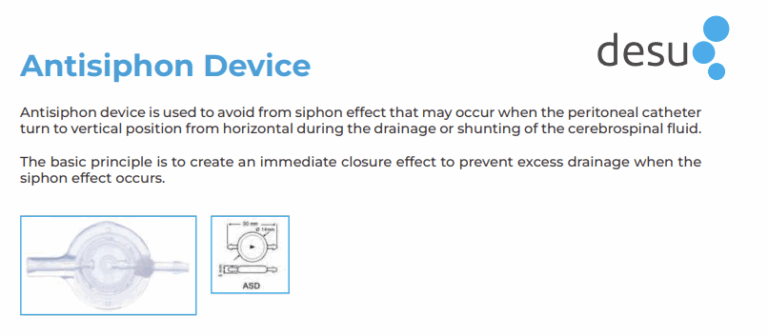
- Help limit over- and under-drainage through valve pressure selection and, where needed, an antisiphon device
- Help reduce infection risk through antibiotic-impregnated catheter options
- Offer adjustable pressure where the patient’s needs may change
- Provide durable long-term function
Key Components of Ventriculoperitoneal Shunts
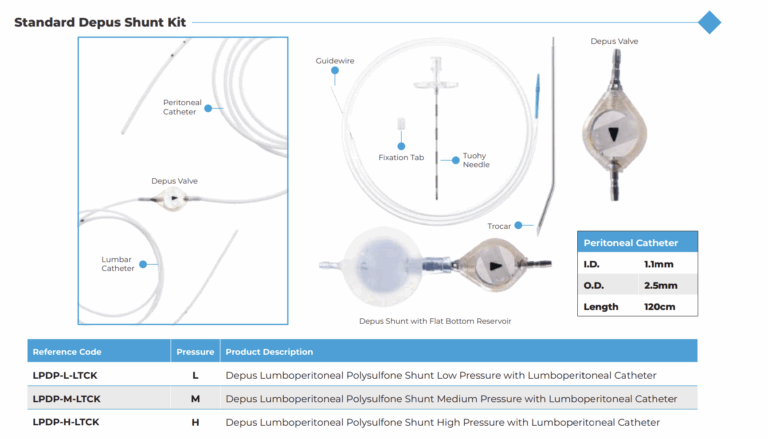
A DESU VP shunt kit brings together the following essential parts:
- Ventricular catheter for CSF collection
- Valve for pressure control
- Peritoneal (distal) catheter for drainage into the peritoneal cavity
- Stylet and right-angled connector for placement
In Depus ventriculoperitoneal shunt kits the Depus valve is combined with ventricular and peritoneal catheters; an antisiphon device and a reservoir can be added according to clinical need.
Advantages of DESU’s Ventriculoperitoneal Shunts
1. Stable Intracranial Pressure Control
The Depus valve has a polysulfone body with a ruby ball and titanium spring mechanism and is offered in low, medium and high fixed pressures, designed for stable pressure regulation after implantation.
2. Antibiotic-Impregnated Catheter Options
DESU VP kits are available with antibiotic-impregnated catheters, in which the agent is released in a controlled way over 28 days. They are intended to help reduce the risk of post-surgical infection, alongside sterile technique.
3. Pediatric and Adult Options
Depus valve sizes suit pediatric and adult patients. The silicone Defit shunt comes in Ultra Small, Small and Regular sizes and contains no metal, and the Decurve burr-hole shunt is offered in pediatric and adult valve sizes.
4. Adjustable Pressure Valves
Where needs may change, adjustable Depus VP kits allow the pressure setting to be changed after surgery with the Depus Adjustment Kit, available in 3 Pressure and 5 Pressure versions. Fixed-pressure valves keep their preset level.
Where Are Ventriculoperitoneal Shunts Used?
VP shunts are implanted in patients with:
- Congenital hydrocephalus
- Acquired hydrocephalus (due to tumors, infections, trauma)
- Normal Pressure Hydrocephalus (NPH)
- Post-hemorrhagic hydrocephalus
Why Hospitals and Distributors Evaluate DESU
DESU was founded in 2007 as an R&D company at Hacettepe Teknokent and exports to more than 50 countries. It offers:
- CE-marked shunt systems
- Production under ISO 13485
- Biocompatible silicone and polysulfone materials
- Fixed-pressure and adjustable valve options
- Responsive technical and clinical support
How to Buy Ventriculoperitoneal Shunts from DESU
DESU works directly with hospitals, clinics and distributors. Its product specialists help with:
- Product details and documentation
- Technical support
- Configuring shunt systems by valve, pressure, catheter and accessories
- International shipping
Talk to a DESU product specialist
Whether you are building a shunt formulary or adding neurosurgical products to a distribution portfolio, DESU product specialists can help you choose the right configurations. Write to sales@desu.tr, use the contact page or request a quote.
Bu konuda uzmanımızla görüşün
Ürün seçimi, teknik özellikler, numune talebi veya distribütörlük başvurusu için ekibimize doğrudan ulaşabilirsiniz.
İlgili yazılar
- DESU’dan HaberlerAdjustment Kit ile Basınç Ayarı: Locator, Magnet ve Compass
- DESU’dan HaberlerDESU Şant: Depus Ayarlanabilir Sistemlerin Mühendisliği
- DESU’dan HaberlerŞant Sisteminde Rezervuar Seçenekleri ve Ne Zaman Kullanılır
- DESU’dan HaberlerŞant Malfonksiyonunda Ayırıcı Tanı: Tıkanma, Aşırı Drenaj, Enfeksiyon
Yorumlar
Henüz yorum yok. İlk yorumu siz yazın.