
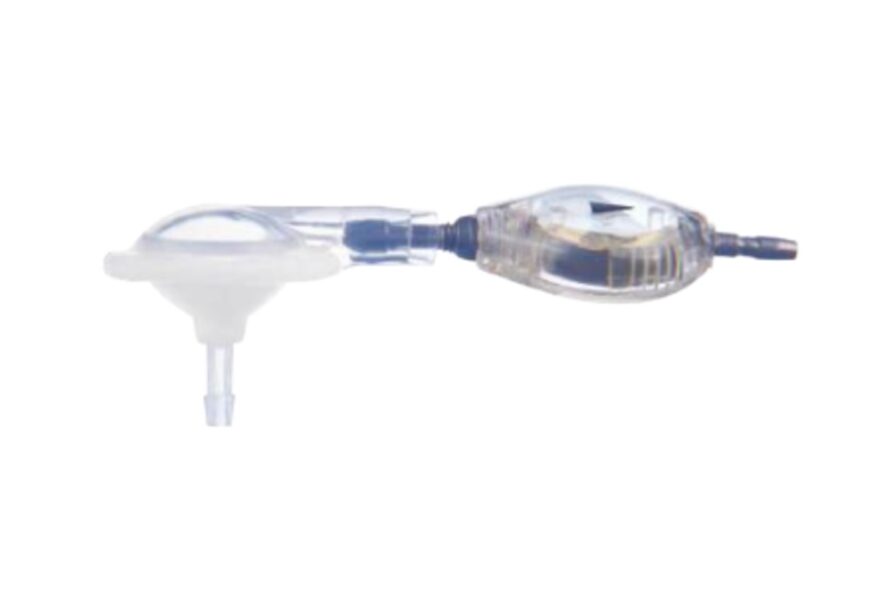
Adjustable VP (Ventriculoperitoneal) Shunts: Precision Engineering and Clinical Management
In neurosurgery, the era of changing of the field, the management of hydrocephalus has evolved from a static one-size-fits-all to a dynamic model oriented towards the patient. Adjustable VP Shunts are a game changer for clinicians who want to manage the unpredictable hydrodynamics of cerebrospinal fluid (CSF). Compared to fixed-pressure valves that have a predetermined threshold, adjustable valves provide the neurosurgeon an opportunity to non-invasively change the intracranial pressure (ICP), which can vary as the physiological requirements for the patient evolve as the surgery proceeds.
For medical device manufacturers such as Desu, the creation of such systems is not just a plumbing problem, but creates a bio-feedback loop, which allows the tech to be customized to the biology of the patient. The Desu Adjustable VP Shunt kits are a prime example of such an innovation, and offer a strong basis for revision surgery reduction and long-term care among newborns, and NPH (Normal Pressure Hydrocephalus) patients.
Advantages of Adjustable VP Shunts
In neurosurgery, the era of changing of the field, the management of hydrocephalus has evolved from a static one-size-fits-all to a dynamic model oriented towards the patient. Adjustable VP Shunts are a game changer for clinicians who want to manage the unpredictable hydrodynamics of cerebrospinal fluid (CSF). Compared to fixed-pressure valves that have a predetermined threshold, adjustable valves provide the neurosurgeon an opportunity to non-invasively change the intracranial pressure (ICP), which can vary as the physiological requirements for the patient evolve as the surgery proceeds.
For medical device manufacturers such as Desu, the creation of such systems is not just a plumbing problem, but creates a bio-feedback loop, which allows the tech to be customized to the biology of the patient. The Desu Adjustable VP Shunt kits are a prime example of such an innovation, and offer a strong basis for revision surgery reduction and long-term care among newborns, and NPH (Normal Pressure Hydrocephalus) patients.
Advantages of Programmable (Adjustable) VP Shunts
Some of the benefits of Programmable (Adjustable) VP Shunts are that they obviate this surgical requirement for pressure correction.
Over drainage and under drainage management: Hydrodynamics post-surgical are notoriously a mess to manage. Over drainage: An open valve can cause collapsed ventricles (slit ventricle syndrome), or the tearing of bridging veins leads to the subdural hematomas/hygromas formed in the ventricle. With a Desu adjustable valve available to the surgeon, the surgeon can simply increase opening pressure (for instance from 100 mmH2O to 140 mmH2O) to mitigate the siphoning effect by removing hematoma and resolving it without scalpel operation.
Under-drainage: If the patient’s symptoms (gait disturbance, incontinence, dementia) persist, the pressure can be decreased to allow more drainage.
Adaptation to Pediatric Growth: With age, the vertical distance from head and abdomen increases, changing the hydrostatic pressure column. What was a valve pressure for an infant may not perform at the level a tall adolescent would. The valves are capable of being programmed to shift position over the life course of the child, which adds up to a long life of the shunt system.
Assessment of NPH: In Normal Pressure Hydrocephalus, finding the right spot for pressure is not easy. The Desu adjustable valves let clinicians tune the angle more precisely for maximum relief of symptoms while still keeping safety a prime requirement, which fixed valves simply cannot do.

How to Adjust Pressure Settings on a VP Shunt Valve
Adjusting the Pressure Settings on VP Shunt Valve Mechanism behind this adjustment is a wonder of magnetic engineering. There is a rotatable magnetic rotor in the Desu adjustable valve housing to control the spring tension on the ball-valve (or similar closing mechanism). The opening pressure changes after the spring tension is changed.
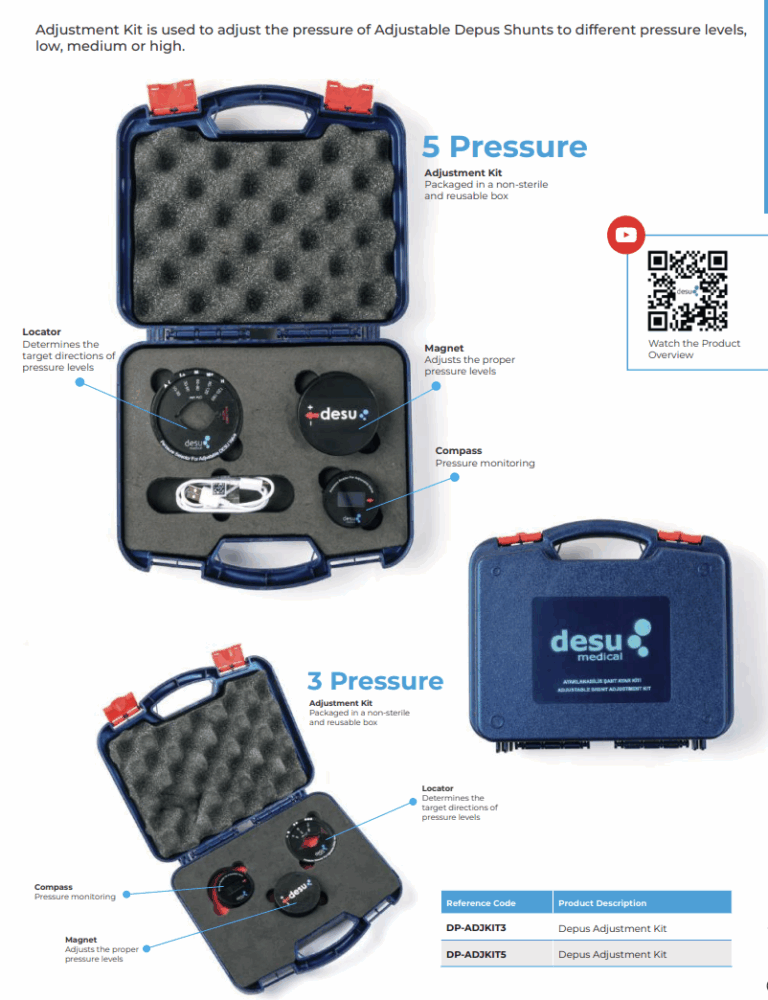
The Adjustment Protocol: Adjusting a Desu valve is a transcutaneous procedure, which means that it is done through the intact skin, but no incision.
Palpation and Localization: The clinician usually first palpates the valve reservoir behind the ear, or on the chest wall. The orientation of the valve should be known. Magnetic Coupling: An external magnetic instrument (Adjustment Kit) is applied directly to the valve. The tool’s powerful magnetization impacts the valve inner rotor. Reprogramming: Physically turns the internal rotor to the desired pressure setting (measured by mmH2O) by rotating the external tool.
As the rotor gets fixed into the new position, a separate click or tactile sensation can almost immediately be felt. Verification: This is the most important stage in a treatment. After adjustment, the new setting has to be verified. Although some advanced tools give feedback, most superior standard is a radiographic confirmation (X-ray). Desu valves have radiopaque indicators that represent pressure setting on an X-ray film that ensure the physical valve matches the desired clinical value.
MRI Safety and Artifacts with Adjustable Shunt Valves
The intersection of strong magnetic fields and magnetically adjustable valves presents a unique challenge in radiology. Since the valve is programmed via magnetism, the powerful field of an MRI scanner has the potential to inadvertently unlock and rotate the internal rotor, changing the patient’s pressure setting. This is a known risk for all programmable valves globally.
MRI Safety Protocols for Desu Valves: Desu adjustable valves are classified as MRI Conditional. This means they are safe to scan, but specific protocols must be followed to prevent patient harm:
Pre-MRI Check: The valve setting should be documented before the patient enters the scanner.
The Scan: The patient can undergo the MRI (usually up to 3.0 Tesla). The static magnetic field may exert a torque on the valve, but modern designs, including Desu’s, incorporate locking mechanisms to resist accidental changes. However, the risk is never zero.
Post-MRI Verification: Immediately after the scan, the patient must not be discharged until the valve setting is checked.
If the MRI magnet has shifted the setting it must be reprogrammed to the original value immediately to prevent acute pressure changes.
Artifact Management: The metallic components of the valve (springs, magnets) cause susceptibility artifacts on the MRI image. This appears as a localized void or a “starburst” distortion around the valve site. While this does not affect the functionality of the shunt, it can obscure brain tissue in the immediate vicinity of the valve. Radiologists account for this by using specific sequences or focusing on areas distal to the valve artifact.
Troubleshooting Malfunctions in Programmable Valves
When a patient with a programmable shunt presents with recurring symptoms (headache, nausea, lethargy), the clinician must determine whether is it a physiological issue (like wrong setting) or a mechanical failure. Troubleshooting Malfunctions in Programmable Valves requires a systematic approach.
The Stuck Valve: Occasionally, proteinaceous debris or blood clots from the CSF can obstruct the internal mechanism, causing the rotor to jam. In this scenario, even if the external magnet is applied, the internal rotor will not turn.
Diagnostic Clue: The clinician attempts to adjust the pressure, but the post-adjustment X-ray shows the setting hasn’t changed. This indicates a mechanical obstruction or a frozen valve, which may require surgical replacement.
Accidental Reprogramming: Patients may inadvertently expose themselves to strong household magnets that are placed directly over the valve.
Diagnostic Clue: A patient who was previously stable suddenly presents with over-drainage symptoms. An X-ray reveals the valve is at a different setting than recorded in the patient’s file. The solution is simple: Reprogram the valve using the Desu adjustment tool. Catheter Issues vs. Valve Issues: Not all malfunctions are the valve’s fault. If the proximal catheter (in the ventricle) is blocked by choroid plexus, adjusting the valve pressure will provide no relief.
Shunt Series/Shuntogram: A series of X-rays or a nuclear medicine study is performed to visualize the flow. If the contrast dye doesn’t move despite the valve being set to the lowest pressure, the blockage is likely in the catheters (proximal or distal), not the valve mechanism.
Siphoning Effect: In upright patients, gravity can pull CSF too fast. Desu adjustable kits can be integrated with Anti-Siphon Devices or gravitational units. If a patient has headaches only when standing up, the valve might be working fine, but a gravitational unit may need to be added or the valve pressure increased to counteract the vertical column effect.
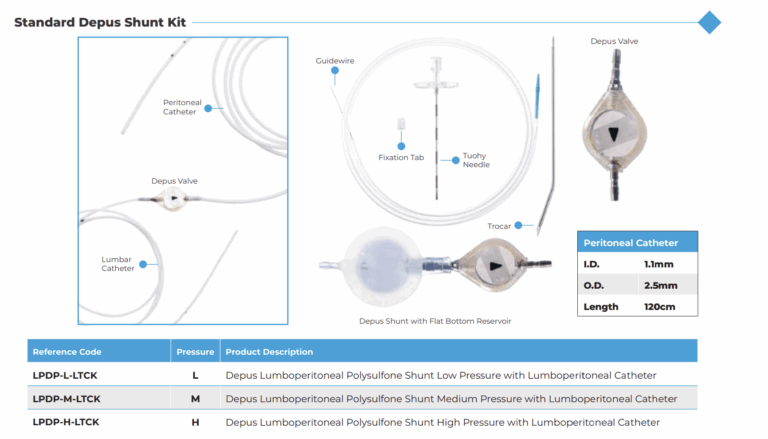
Desu Adjustable VP Shunt system offers a sophisticated toolkit for the neurosurgeon.
However, the hardware is only as good as the management strategy. Understanding the physics of adjustment, the rigors of MRI safety, and the nuances of troubleshooting ensures that this technology translates into a better quality of life for the patient.
If you would like to receive detailed information about DESU Medical products or explore distributorship and partnership opportunities, please do not hesitate to contact us. Our team will be happy to support you with product specifications, certifications, pricing structures, and collaboration models tailored to your market and needs.
For sales inquiries, product catalogs, and distributorship requests, you may reach us directly at [email protected]
We look forward to building long-term, value-driven partnerships and supporting healthcare professionals with reliable, high-quality medical solutions.
