
What Factors Influence the Dural Graft Healing Process?
The dural graft healing process plays a crucial role in determining patient outcomes after dural graft surgery. Healing can be influenced by a variety of factors, such as the chosen dural graft materials, a patient’s overall health, and even the presence of possible dural graft complications. Understanding these factors is important not only for surgeons using specialized biological products, including options from Desu Medical, but also for patients seeking the best recovery possible. Additionally, a focus on minimizing infection, ensuring proper technique, and selecting the appropriate resorbable graft can make a substantial difference. This article explores these influences in depth, offering insights for both practitioners and those undergoing treatment.
Key Points
- Patient health, choice of high-quality biological graft material, surgical technique, and post-operative care all impact the success and speed of the dural graft healing process.
Understanding the Fundamentals of Dural Graft Healing
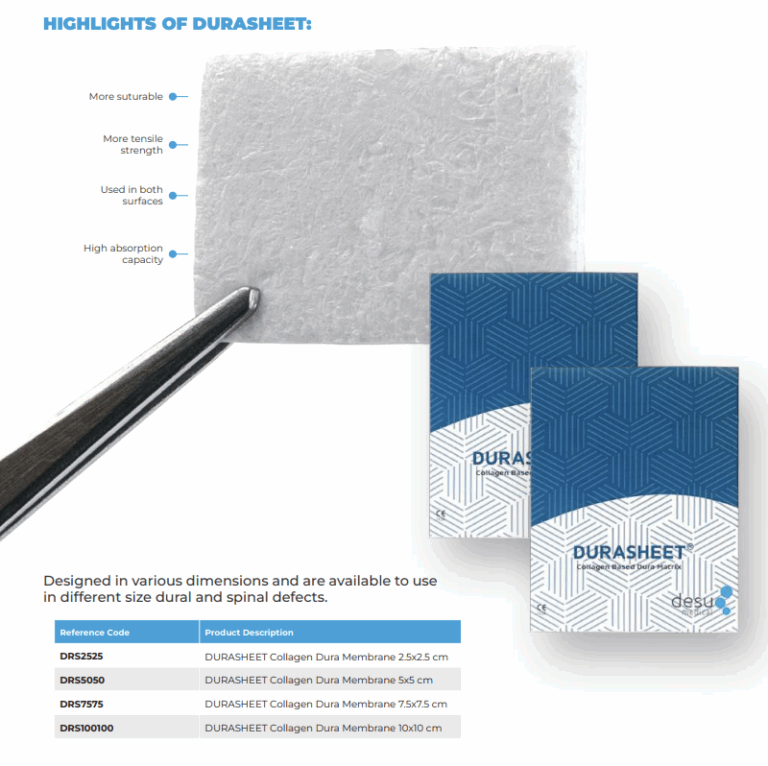
The dural graft healing process begins immediately after dural graft surgery. Generally, the body initiates a cascade of biological responses to integrate the graft with native tissue. Collagen-based grafts are particularly designed to support this natural process by acting as a scaffold for tissue regeneration. The initial phase centers on inflammation, typically mild, which encourages cellular migration to the repair site. Following this, cells begin to regenerate the protective layers around the brain and spinal cord, eventually replacing the resorbable graft with the patient’s own tissue.
- Hemostasis: blood stabilizes at the graft site.
- Cell infiltration: fibroblasts migrate into the porous structure of the collagen matrix.
- Maturation: new tissue strengthens, and the graft is gradually absorbed.
Despite this orchestrated process, strict monitoring is essential to prevent complications like infections or cerebrospinal fluid leaks. Nevertheless, the body’s capacity for dural graft healing often leads to successful long-term outcomes, especially when highly biocompatible materials are used.
Patient-Related Factors Impacting Dural Graft Outcomes
Patient characteristics undeniably shape the success of medical procedures involving dural grafts. Factors such as age, overall health, and pre-existing conditions can sometimes interact in unexpected ways, subtly influencing the dural graft healing process. For example, patients with diabetes or autoimmune disorders may face a more unpredictable healing timeline.
Nutrition and lifestyle choices, including smoking or alcohol consumption, may either support or impair recovery. Genetic differences could possibly explain why the dural graft healing process is straightforward for some yet complicated for others. Therefore, tailoring post-operative care to each individual is crucial for optimal results in dural graft procedures.
Role of Surgical Techniques in Dural Graft Integration
The success of any procedure involving a dural graft largely relies on refined surgical techniques. Meticulous handling of the delicate tissues ensures fewer complications and a smoother dural graft healing process. Surgeons often debate which methods lead to optimal positioning, but the use of sutureless or onlay-type collagen grafts has gained popularity for simplifying the procedure and reducing operation time. For example, achieving a water-tight seal is critical.
Biological grafts that conform well to the brain surface can help promote harmonious healing and reduce risks for leakage. Careful preparation of the recipient site is essential. These choices shape the overall dural graft healing process. Commitment to precise, attentive technique always supports better integration of the graft material.
The Importance of Graft Material Selection on Healing Success
Choosing the right graft material can significantly affect the outcome of the dural graft healing process. Biological materials, specifically bovine Type-1 collagen matrices, introduce unique characteristics—such as high biocompatibility, excellent tensile strength, and flexibility—that enhance healing.
Unlike non-absorbable materials that remain as foreign bodies, resorbable collagen grafts support natural tissue integration during the healing process. Another crucial consideration is how a selected material interacts with surrounding tissues. Accordingly, the table below highlights the benefits of collagen-based options:
| Material Type | Potential Benefit |
|---|---|
| Bovine Collagen Matrix (Xenograft) | High biocompatibility, fully resorbable, supports rapid tissue regeneration, reduces operation time. |
| Autologous (Patient’s Own) | No rejection risk, but requires additional incision and prolongs surgery time. |
Therefore, thoughtful graft material selection—prioritizing biocompatibility and resorption—lays the groundwork for a smoother healing experience.
Influence of Intraoperative Conditions on Dural Repair
Intraoperative factors can significantly shape the outcome of dural repair. The surgeon’s approach, level of visibility, and handling of tissues all contribute to the overall success of the operation. Factors like excessive bleeding or tissue drying may hinder the dural graft healing process. Conversely, careful moisture control and gentle manipulation promote a more favourable healing environment.
The choice of a flexible and conformable biological graft can also influence the delicate balance required for a smooth dural graft healing process. Adequate hemostasis and minimal tension at the site often prove beneficial. Nevertheless, attention to these intraoperative details usually pays off in better outcomes and fewer complications.
Postoperative Care and Its Effect on Dural Graft Healing
The period following surgery plays a critical role in the dural graft healing process. Effective management of infection risk is essential, because even minor contamination can slow the healing process. Maintaining the right balance of hydration and ensuring proper nutrition are also important; these factors contribute to cellular repair and tissue integration. Most practitioners agree that minimizing strain at the site can support the dural graft healing process.
“Close monitoring and tailored support often tip the balance in favour of successful recovery after a dural repair.”
Additionally, patient education and regular follow-up appointments ensure that potential issues are identified quickly. Therefore, each aspect of postoperative care has a direct influence on overall healing.
Complications That May Hinder Dural Graft Recovery
Recovery after a dural graft is a delicate process. Sometimes, the dural graft healing process faces obstacles such as infection or cerebrospinal fluid leakage, though the likelihood is minimized with the use of biologically compatible collagen grafts. Some commonly observed hindrances include:
- Infection: any post-operative infection can interfere with tissue integration.
- CSF Leak: improper sealing may lead to leaks.
- Inflammation: excess swelling sometimes disrupts the normal recovery timeline.
However, resorbable collagen materials are generally associated with lower risks of foreign body reactions compared to permanent synthetic implants. Careful monitoring remains vital throughout recovery.
Advancements in Biomaterials for Improved Dural Healing
Recent years have brought noteworthy progress in biomaterials designed to enhance the dural graft healing process. Many of these advances focus on creating natural collagen scaffolds that mimic the structure of the dura mater, supporting cell migration and tissue integration.
Desu Medical utilizes advanced processing techniques to ensure high purity and optimal resorption rates in its collagen matrices. Newer biological options reduce inflammation and infection rates, which is crucial for the dural graft healing process. There is excitement around materials that encourage rapid vascularisation, a factor often linked to more robust healing. The general trend signals a shift towards fully resorbable, natural solutions that restore the patient’s native tissue anatomy.
Future Directions and Innovations in Dural Graft Science
The journey of dural graft healing process research is ongoing. Scientists are increasingly focused on refining bovine collagen processing to better mimic the properties of natural tissue, hence supporting a smoother dural graft healing process. Regenerative medicine principles are being integrated into graft design to optimize the healing process. Ultimately, these advances bring hope, focusing on safer, more effective biological solutions for complex clinical scenarios.
Conclusion
In summary, understanding the dural graft healing process is essential for achieving the best results in recovery and patient care. By choosing biocompatible, collagen-based materials and working closely with medical teams, individuals can help ensure a smoother journey toward wellbeing. Ultimately, patience and attention to each stage of healing make a real difference, allowing for more confident steps forward after surgery.
For more information, visit Desu.
If you would like to receive detailed information about DESU Medical products or explore distributorship and partnership opportunities, please do not hesitate to contact us. Our team will be happy to support you with product specifications, certifications, pricing structures, and collaboration models tailored to your market and needs.
For sales inquiries, product catalogs, and distributorship requests, you may reach us directly at [email protected]
We look forward to building long-term, value-driven partnerships and supporting healthcare professionals with reliable, high-quality medical solutions.
