
Dural graft biocompatibility describes how safely a graft interacts with the tissues it touches. For a membrane that lies directly over the brain or spinal cord and stays in the body until it is resorbed, this is one of the most important properties a surgeon can ask about. Biocompatibility is not a single test or a single number. It is the outcome of a structured biological evaluation, carried out under the ISO 10993 series of standards. This article explains how that evaluation works and how to read the evidence a manufacturer provides.
Biocompatibility as Part of Risk Management
ISO 10993-1 frames biological evaluation as part of the manufacturer’s overall risk management process. The starting point is not a list of tests but a question: given what this device is made of, how it is manufactured and how it is used, what biological risks could arise? Testing is then selected to answer the questions that remain after reviewing materials, manufacturing processes and existing data.
How a Dural Graft Is Categorised
ISO 10993-1 categorises devices by the nature and duration of body contact. A dural graft is an implant device in contact with tissue, and because it remains in the body while it is gradually resorbed, it falls into the long-term contact category, meaning more than thirty days. This categorisation determines which biological endpoints need to be addressed.
Key Endpoints for Dural Graft Biocompatibility
For a long-term implant such as a dural graft, the evaluation typically addresses the following endpoints, each covered by its own part of the series:
- Cytotoxicity (ISO 10993-5): whether the material or its extracts damage cells in culture.
- Sensitisation (ISO 10993-10): whether the material can cause an allergic-type response.
- Irritation (ISO 10993-23): whether the material causes local irritation.
- Systemic toxicity (ISO 10993-11): whether substances released from the material cause effects elsewhere in the body, including material-mediated pyrogenicity.
- Genotoxicity (ISO 10993-3): whether the material can damage genetic material.
- Implantation (ISO 10993-6): how tissue responds locally when the material is implanted over time, including inflammation, encapsulation and resorption.
Chemical and material characterisation under ISO 10993-18 supports these endpoints by describing what the material contains and what may be released from it.
What Implantation Studies Show for Collagen Grafts
For a resorbable collagen graft, implantation data are especially informative. A well-tolerated graft shows a limited, transient inflammatory response, infiltration by host fibroblasts, gradual resorption of the implanted collagen and its replacement by organised connective tissue. A poorly tolerated material, by contrast, may show persistent inflammation or a thick fibrous capsule. These observations link directly to the clinical goal: a quiet implantation site that heals into a new dural layer.
Why Material Purity Matters for Biocompatibility
With collagen of animal origin, dural graft biocompatibility depends heavily on purification. Type I collagen is highly conserved across mammals, so the collagen itself is generally well tolerated. The non-collagenous proteins, lipids and cellular remnants that come with raw tissue are more likely to provoke a reaction. A purified, natural Type I collagen membrane therefore starts from a favourable position, which the biological evaluation then has to confirm. Our article on Type I collagen explains the biology in more detail.
Endotoxins and Devices Near the Central Nervous System
Bacterial endotoxins can cause fever and inflammatory reactions, and devices that contact cerebrospinal fluid are held to particularly strict endotoxin limits. Manufacturers control endotoxin through raw material selection, clean processing and release testing. When reviewing a dural graft, it is reasonable to ask how endotoxin is controlled and tested.
Biocompatibility After Sterilisation and Ageing
Dural graft biocompatibility has to hold for the product as it reaches the patient, not only for the raw material. Sterilisation can change a material, and so can storage over the product’s shelf life. For this reason, biological testing is normally performed on the final, sterilised device, and stability studies confirm that the graft keeps its properties until its expiry date. When a manufacturer changes a raw material supplier, a process step or the sterilisation method, the biological evaluation is reviewed to decide whether additional testing is needed.
Clinical Evidence Complements Laboratory Testing
Laboratory and animal studies show whether a material is biologically safe, but they do not replace clinical experience. Under the Medical Device Regulation, the clinical evaluation of a dural graft brings together published literature, clinical data and post-market surveillance. For surgeons, the most useful view of dural graft biocompatibility combines both sources: standardised testing under ISO 10993 and the behaviour of the graft in routine practice.
Reading a Biocompatibility Summary
Manufacturers rarely publish full test reports, but they can provide a summary of the biological evaluation. When reading a summary of dural graft biocompatibility, look for:
- the device categorisation used (implant, tissue contact, long-term);
- the endpoints addressed and the standard used for each;
- whether the tested samples were the final, sterilised device;
- the conclusion of the biological evaluation and how it fits into the risk management file.
Dural Graft Biocompatibility at Desu
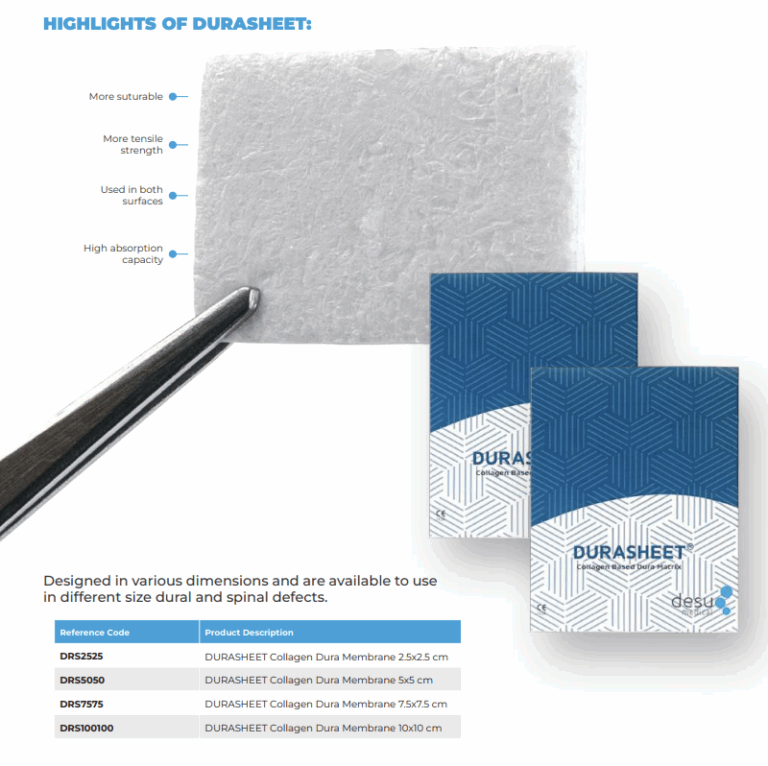
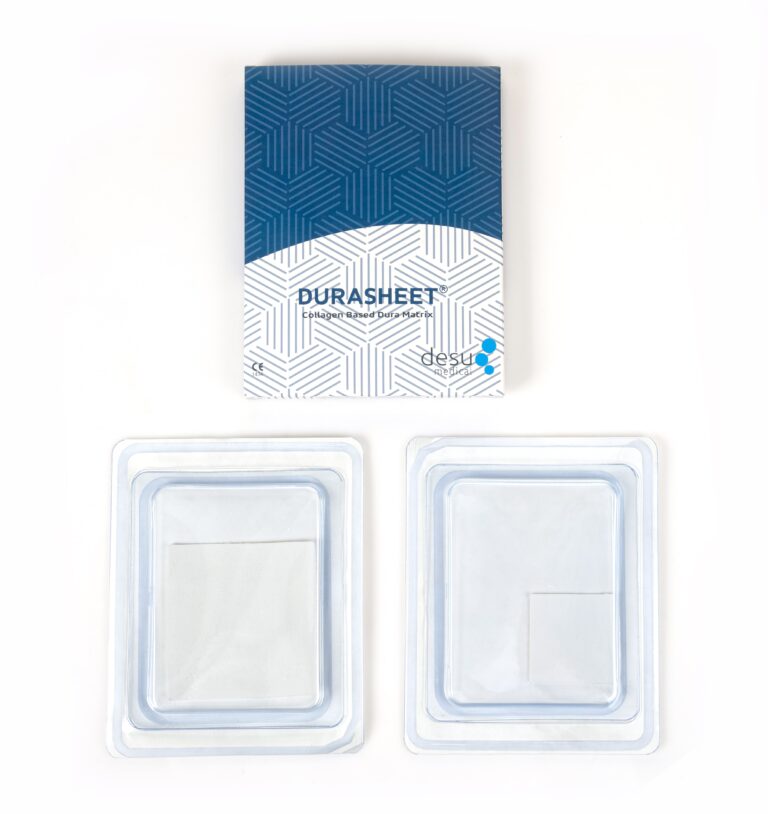
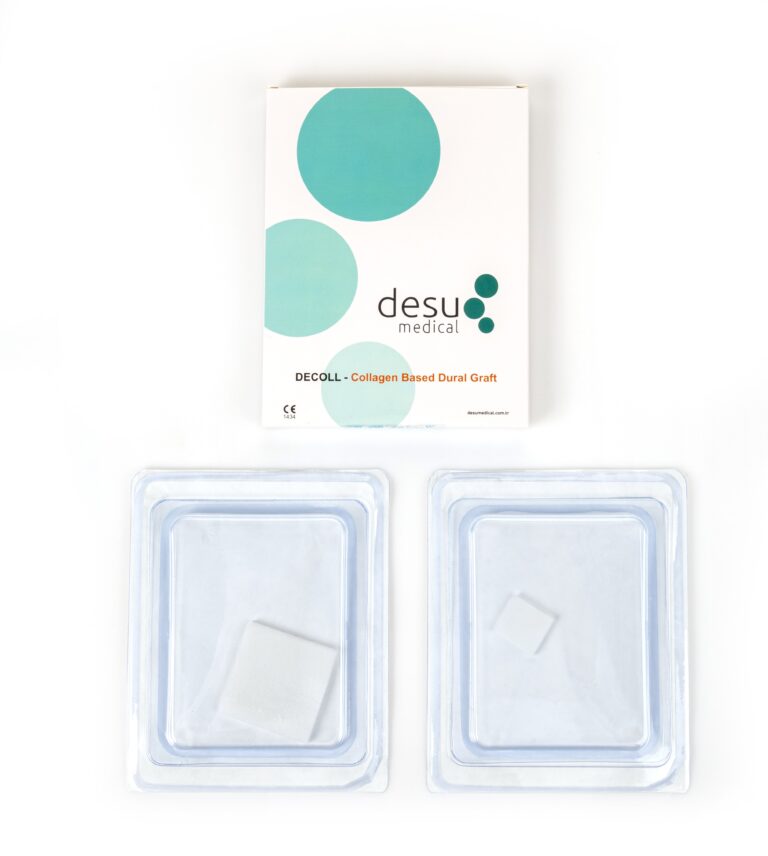
Desu’s DURASHEET and DECOLL membranes are made from natural, pure Type I bovine collagen. Biocompatibility has been evaluated according to the ISO 10993 series, including cytotoxicity, sensitisation, systemic toxicity and implantation response, and manufacturing operates under ISO 13485. Documentation is available to hospitals on request.
Frequently Asked Questions
Does biocompatible mean the graft causes no reaction at all?
No. Every implant causes some tissue response. Biocompatibility means the response is appropriate for the intended use: for a resorbable dural graft, a limited inflammatory phase followed by integration and replacement by host tissue.
Why does contact duration matter for dural graft biocompatibility?
ISO 10993-1 requires more extensive evaluation for devices that stay in the body for more than thirty days. Because a dural graft remains until it is resorbed, it is evaluated as a long-term implant.
How can a hospital review the biological evaluation?
Ask the manufacturer for a summary of the biological evaluation that lists the endpoints addressed, the standards applied and the conclusion, together with the CE certificate.
References and Further Reading
- ISO 10993-1: Biological evaluation of medical devices – Evaluation and testing within a risk management process
- ISO 10993-5, -6, -10, -11, -23: cytotoxicity, implantation, sensitisation, systemic toxicity and irritation
- PubMed: collagen dural substitute biocompatibility
About this article
Prepared by the Desu Medical editorial team. Desu Medical has designed and manufactured neurosurgical devices in Ankara, Türkiye, since 2007, including the DURASHEET and DECOLL collagen dura membranes, which are made from natural, pure Type I bovine collagen. Manufacturing operates under an ISO 13485 quality management system and the dural graft range is CE certified. This article is written for healthcare professionals and general information; it does not replace the Instructions for Use or clinical judgement. Last reviewed: October 2026.
