
Dural repair in pediatric neurosurgery follows the same principles as in adults, but children are not small adults. Their skull is still growing, their dura can be thin and fragile, and many of the conditions treated are specific to childhood. Choosing a graft and planning a closure for a child therefore involves some additional considerations. This article outlines the situations in which children need a dural graft and the factors that guide the choice.
When Children Need Dural Repair
In pediatric neurosurgery, dural grafts are used in a range of operations, including:
- Posterior fossa tumours: such as medulloblastoma, ependymoma and pilocytic astrocytoma, where the dura of the posterior fossa may need to be enlarged or repaired.
- Chiari malformation: expansile duraplasty during posterior fossa decompression, described in our article on Chiari duraplasty.
- Craniosynostosis surgery: where dural tears may occur during reshaping of the skull vault.
- Trauma: including the growing skull fracture of infancy, in which a dural tear beneath a fracture allows the fracture line to widen over time.
- Congenital defects: such as encephalocele and, in some cases, spinal dysraphism.
The Growing Skull
A child’s skull and brain continue to grow for years after surgery. A dural repair should not restrict that growth. This is one reason why resorbable grafts are attractive in pediatric neurosurgery: rather than remaining as a permanent sheet, a collagen graft is gradually replaced by the child’s own connective tissue, which can then grow with the patient. Long-term behaviour matters more in a child who may live with the repair for many decades.
Thin Dura and Fragile Tissue
Tissue fragility is one of the most practical differences in pediatric neurosurgery. In infants and young children the dura can be thin and tear easily, and sutures may cut through the edges. Surgeons often use fine sutures with minimal tension, generous overlap of the graft beneath the dural edges and, where suturing is unreliable, onlay techniques supported by a careful layered closure. A soft, conformable graft that can be trimmed precisely is helpful in these situations.
Graft Options in Pediatric Neurosurgery
The main graft options in pediatric neurosurgery are the same as in adults, but their relative advantages shift with the size and age of the patient:
- Autologous pericranium: often the first choice when enough is available, although its size can be limited in small children.
- Natural collagen grafts: available in small formats, easy to trim and resorbed over time.
- Synthetic grafts: used by some surgeons, with the consideration that non-resorbable materials remain for life.
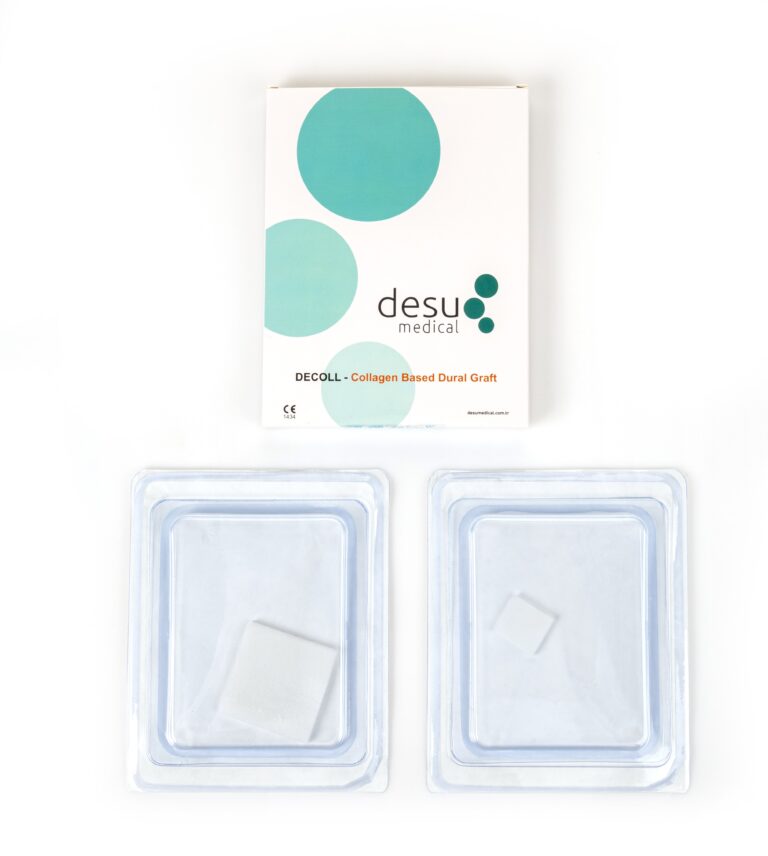
Desu’s DECOLL collagen dura membrane is made from natural, pure Type I bovine collagen and is available in square formats starting from 2.5 x 2.5 cm, which suits the smaller defects typical of pediatric cases. Always check the Instructions for Use for the approved indications and any age-related information before use.
Hydrocephalus and CSF Dynamics
Many children undergoing neurosurgery also have, or develop, hydrocephalus. Raised CSF pressure places additional stress on a dural repair and increases the risk of wound leakage and pseudomeningocele. In pediatric neurosurgery, addressing hydrocephalus, for example with a shunt or endoscopic third ventriculostomy, is therefore part of protecting the dural closure. Desu also manufactures shunt systems for hydrocephalus, including the Defit silicone shunts.
Infection Prevention
Wound care is a constant concern in pediatric neurosurgery. Children’s wounds can be harder to protect after surgery, particularly in infants and in the occipital region. Careful handling of the graft, minimising the time the package is open, meticulous layered closure and appropriate wound care all contribute. Our article on infection prevention in duraplasty covers these measures.
Planning the Closure Before Surgery
In pediatric neurosurgery, the dural closure is best planned before the first incision. The surgeon considers whether autologous pericranium can be harvested through the same incision, whether the defect is likely to need an expansile graft, and which graft sizes should be available in theatre. Having the right formats ready shortens the time the dura is open and avoids improvising at the end of a long operation in a small patient who is sensitive to heat and blood loss.
Follow-Up After Pediatric Neurosurgery
Follow-up after pediatric neurosurgery includes wound checks, monitoring of head circumference in infants and imaging when clinically indicated. A soft swelling under the wound may be a pseudomeningocele, which is discussed in our article on pseudomeningocele repair. Most small collections resolve, but a tense or growing swelling, wound leakage or signs of infection need prompt review by the surgical team.
Talking to Families
Parents often want to know what the graft is made of and what happens to it. A clear explanation helps: the graft is made from purified natural collagen of bovine origin, it acts as a scaffold, and it is gradually replaced by the child’s own tissue. Families with personal or religious considerations about bovine-derived materials can discuss them with the surgical team before the operation.
Summary
Dural repair in pediatric neurosurgery calls for attention to growth, tissue fragility, CSF dynamics and long-term outcome. Resorbable natural collagen grafts in small, trimmable formats are well suited to many of these situations.
Frequently Asked Questions
Are collagen dural grafts used in children?
Yes. Natural collagen grafts are used in many pediatric neurosurgery procedures. Always check the Instructions for Use for the approved indications and any age-related information.
Will a dural graft grow with the child?
A resorbable collagen graft is gradually replaced by the child’s own connective tissue, and that new tissue can grow with the patient.
What is a growing skull fracture?
It is a complication of skull fractures in infants and young children, in which a tear in the dura under the fracture allows the fracture line to widen over time. Treatment usually involves repairing the dura.
References and Further Reading
- PubMed: pediatric duraplasty
- PubMed: growing skull fracture dural repair
- Desu Medical, DECOLL collagen dura membrane
About this article
Prepared by the Desu Medical editorial team. Desu Medical has designed and manufactured neurosurgical devices in Ankara, Türkiye, since 2007, including the DURASHEET and DECOLL collagen dura membranes, which are made from natural, pure Type I bovine collagen. Manufacturing operates under an ISO 13485 quality management system and the dural graft range is CE certified. This article is written for healthcare professionals and general information; it does not replace the Instructions for Use or clinical judgement. Last reviewed: October 2026.
