
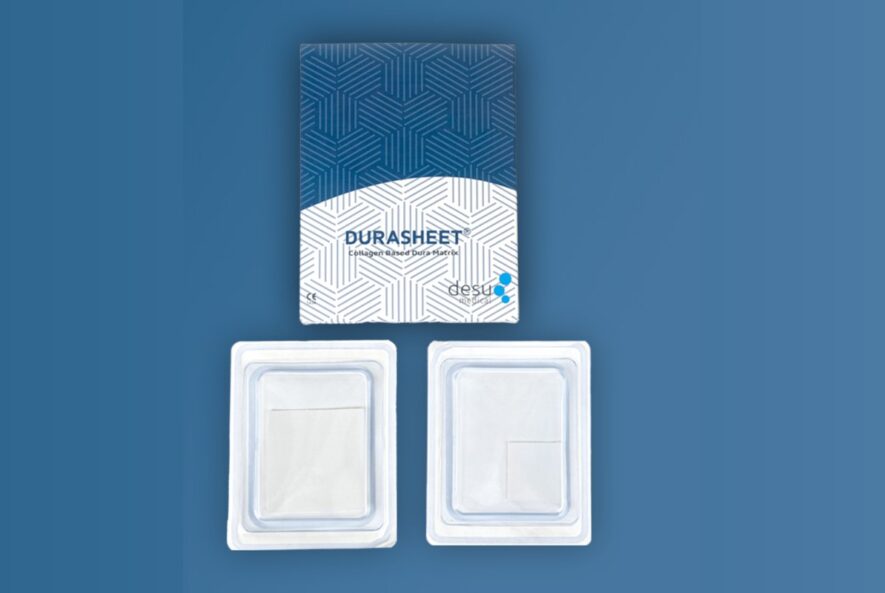
Autologous vs Biological Dural Graft: A Delicate Choice for the Brain
The dura mater is the most fundamental protector of the brain. Carrying one of the finest balances of the human body, it is a physical barrier, a protector of the cerebrospinal fluid. However, when surgeries, trauma, or tumors disrupt the integrity of this membrane, the need for healing support arises. This is where the question of autologous vs biological dural graft arises: A graft taken from the patient’s own body, or a high-purity biological membrane produced by modern science?
Both options have the same underlying goal: to support and protect the brain’s own construction. But each accompanies this fundamental process in a different tone. For more information, please visit desu.tr. Don’t miss the privileges where modern medicine meets its own nature.
Autologous Dural Graft: The Body Repairing Itself, But at a Cost
An autologous graft is a closure created from the body’s own tissue (usually fascia lata or pericranium). It is a way for the body to connect with itself. The advantages are natural and intuitive:
-
Full biological compatibility
-
Zero risk of rejection
-
A return of the body to its own rhythm
But along with these glories, there are significant burdens:
-
Additional Incision: A second surgery site is needed to harvest the tissue.
-
Increased Trauma: More pain, risk of hematoma, and infection at the donor site (leg or scalp).
-
Prolonged Operation Time: Harvesting the graft adds 30-45 minutes to the surgery.
As the body heals itself, it carries these extra burdens. This is where the autologous method comes at a high cost. Check desu.tr for more details. Let your body carry fewer burdens; let us do it for you.
Biological Dural Graft: Science Meets Nature (Desu Medical)
Biological dural grafts (Desu) represent the way in which medicine communicates with tissue. Unlike permanent synthetic plastics, Desu’s biological grafts are made from purified Type-1 Collagen. Science reinterprets sterility, collagen arrangement, and mechanical strength to create a structure that is as natural as the patient’s own tissue but ready to use instantly.
In the autologous vs biological comparison, Desu options have gained an increasingly strong foothold because:
-
No Additional Incision: No need to cut the patient’s leg or scalp.
-
Shortens Operation Time: Ready to use immediately.
-
Controlled Quality: Unlike patient tissue which can be weak or irregular, Desu grafts are standard and strong.
-
Natural Healing: The body regenerates itself, replacing the resorbable graft with its own tissue over time.
Science alleviates the weight of regeneration. Let your burden weigh lighter, get in touch: desu.tr
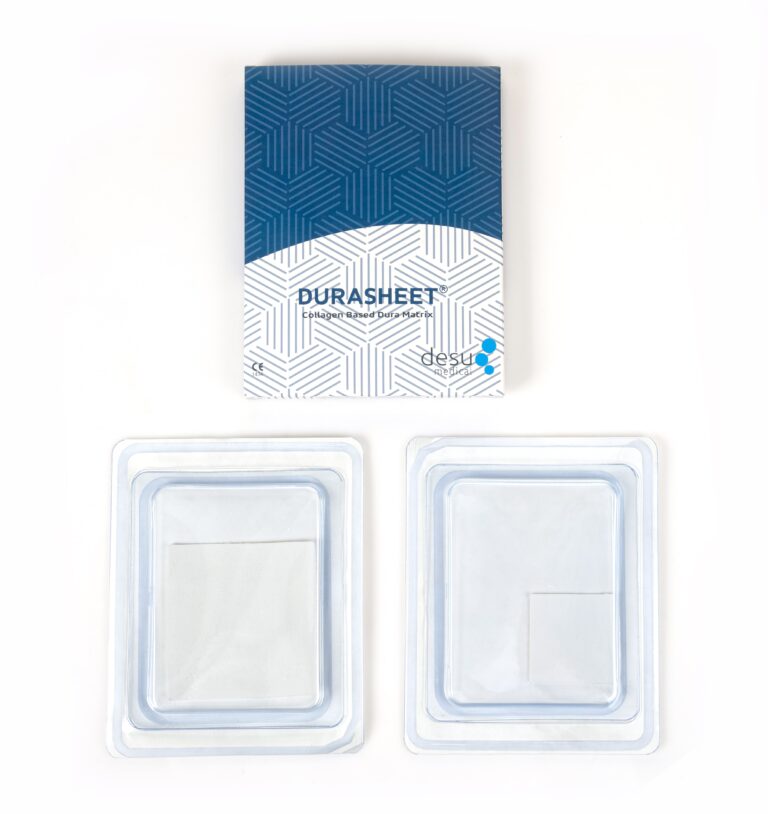
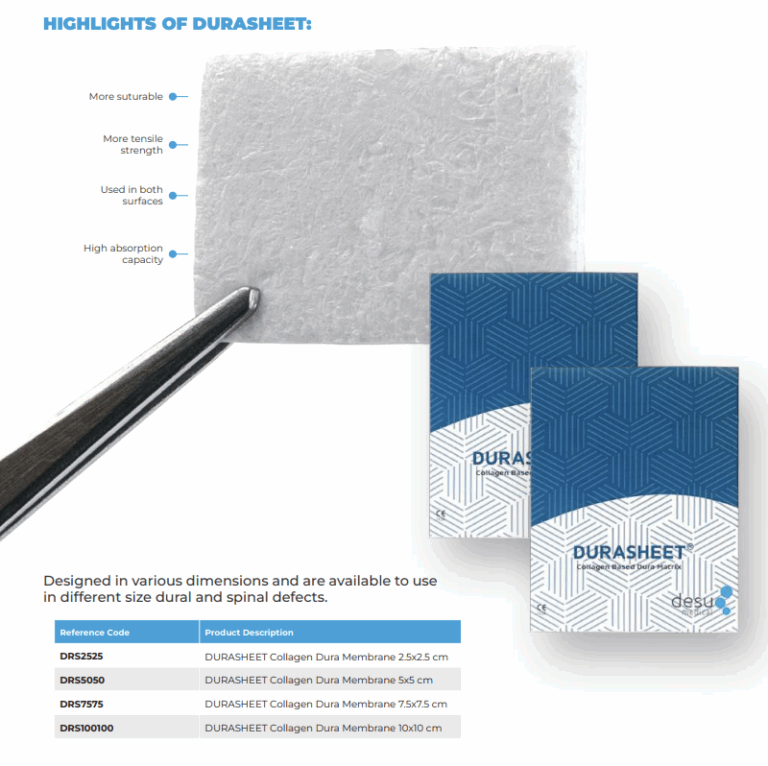
Where Durasheet Fits in the Autologous vs Biological Debate?
Durasheet represents the scientific perfection of biological grafts in its purest form. High-purity Type I collagen mimics the natural structure of the dura mater as closely as possible. It is not merely an artificial barrier; it is a regenerative scaffold.
-
Compact pores: Prevent CSF leaks immediately.
-
Elastic structure: Remains secure during suturing, just like natural fascia.
-
Natural fit: Settles into soft tissue perfectly.
This application of Durasheet is a privilege that combines the biocompatibility of the autologous approach with the convenience of the modern world. We would like you to benefit from this privilege. Check: desu.tr
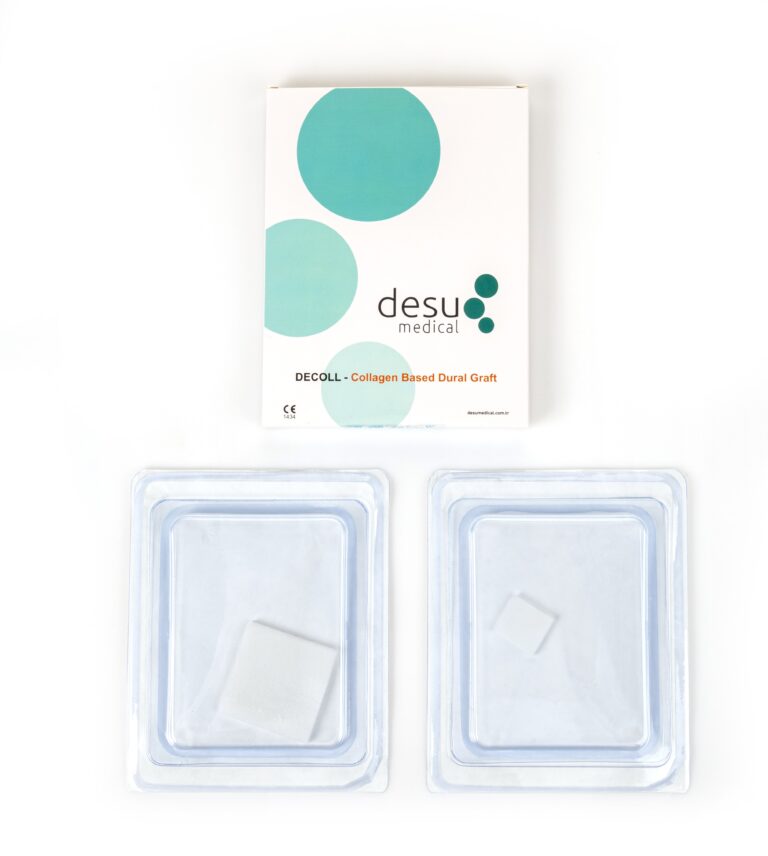
Decoll: A Controlled Step Within Biological Recovery
Decoll gives the tissue a modernity that avoids the negative implications of permanent synthetics. Owing to its CE-certified production, balanced resorption process, and stable surface structure, it puts brain tissue reconstruction on a safe footing.
The essential advantages of Decoll:
-
Homogeneous density: Provides a tighter barrier effect than irregular autologous tissue.
-
Surface integrity: Remains intact during surgical manipulation.
-
Biological profile: Fully accepted by the tissue over time.
-
Controlled healing: Disappears progressively as the body heals (Resorption).
With these fundamental advantages, Decoll is gentle on the texture and adapts naturally over time. Integrate the elegant mathematics of Decoll into your life: See desu.tr for more information.
Autologous vs Biological Dural Graft: Which Is Better?
Autologous vs Biological Dural Graft: Which Is Better? There is no single answer, but the trend is clear. Autologous tissue offers a natural repair but demands a high price in terms of pain, time, and surgical trauma. Biological graft (Desu) is the safe hand of science: it offers the same natural repair but is faster, painless (no donor site), and predictable.
In today’s modern surgery, many teams prefer Desu biological grafts to reduce heavy overheads and set the operation to a safe standard. Because healing is not only the completion of the biological process; the sustainability of the post-operative process (less pain, faster discharge) is equally important. Durasheet and Decoll are two modern options that naturally adapt to this process without the drawbacks of permanent synthetics or painful autografts.
For more information on modern regenerative options, please visit desu.tr.
Recovery Always Finds Its Way
The ultimate common goal of autologous vs biological dural graft foundations is to allow your brain to return to itself. Durasheet is based on precision and Decoll on controlled regeneration. Both are designed for modern surgery to carry this process safely. In this design, the postsurgical process becomes sustainable, and the biological process is completed naturally—leaving no foreign body behind.
If you are in favor of naturalness without the pain of harvesting your own tissue, you know the address. desu.tr
If you would like to receive detailed information about DESU Medical products or explore distributorship and partnership opportunities, please do not hesitate to contact us. Our team will be happy to support you with product specifications, certifications, pricing structures, and collaboration models tailored to your market and needs. For sales inquiries, product catalogs, and distributorship requests, you may reach us directly at [email protected]
We look forward to building long-term, value-driven partnerships and supporting healthcare professionals with reliable, high-quality medical solutions.
