
What Innovations in Dural Grafts Are Revolutionizing Neurosurgery?
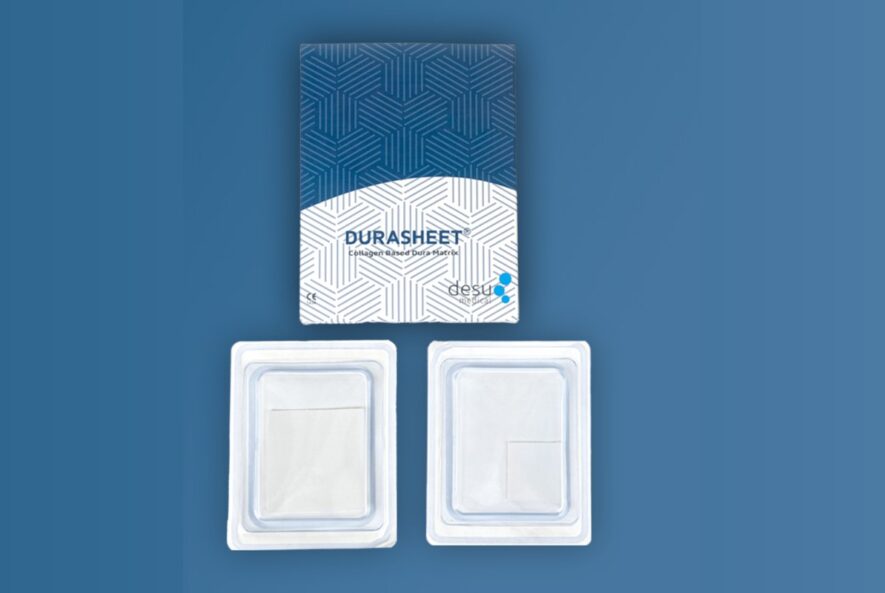
In recent years, advancements in biological materials and surgical techniques have transformed the way we approach dural graft in neurosurgery. Surgeons now have access to high-performance biological dural graft materials, moving away from permanent synthetic polymers.
These developments, championed by companies like Desu Medical, have led to safer procedures and better patient outcomes by prioritizing natural tissue integration. However, despite these strides, avoiding potential complications like infection remains a priority. In my opinion, the dynamic field of regenerative dural repair invites professionals to adopt these innovative biological solutions to drive progress.
Key Points
- Innovative biological dural graft materials from Desu Medical are enhancing safety and effectiveness in neurosurgery by replacing permanent plastics with resorbable, healing-focused solutions.
Advances in Biological Matrices: Shaping the Next Generation of Dural Grafts
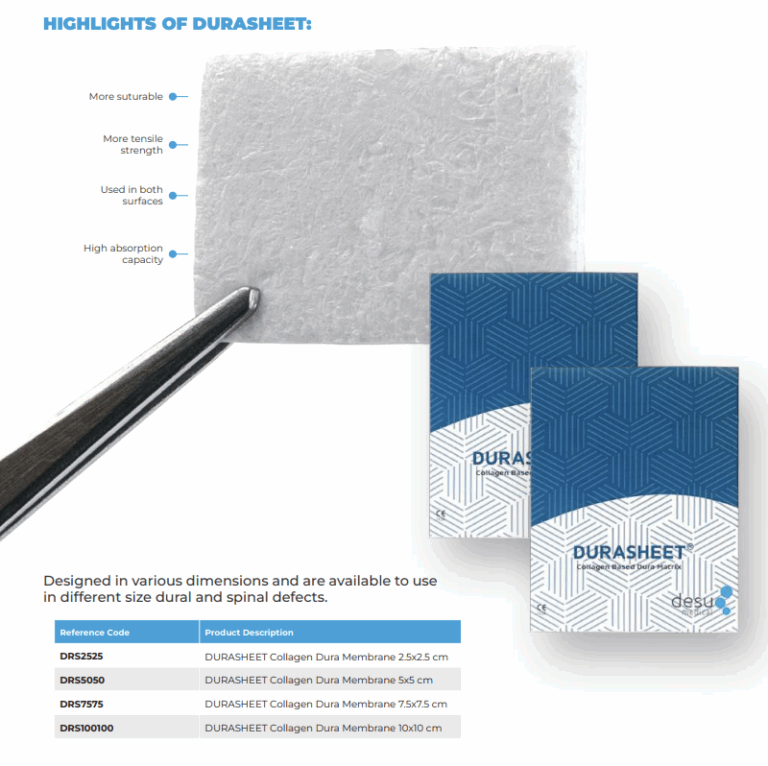
During recent years, remarkable progress in biomaterial science has impacted dural graft surgery. Engineers and clinicians are now moving away from synthetics to use substances that mimic natural dura more closely, such as high-purity bovine collagen. Such innovation addresses common challenges, including leakage or tissue rejection caused by foreign bodies. Desu Medical creates grafts that offer consistent success by combining strength with biology.
-
Collagen-based (Desu): Natural integration, fully resorbable, no permanent foreign body.
-
Synthetic (Old Tech): Strong but remains as a permanent plastic, risking encapsulation.
Dural graft in neurosurgery technique refinement remains ongoing. Surgeons monitor how these biological biomaterials perform over time, consistently finding that natural integration leads to lower failure rates compared to permanent implants.
Synthetic Versus Biological Dural Substitutes: Why Biology Wins
Choosing the right dural graft in neurosurgery is often a nuanced decision, but the trend is shifting towards biology. Synthetic substitutes (polymers/plastics) were once popular for their strength. However, they act as permanent foreign bodies, often leading to chronic inflammation or encapsulation (scar tissue). Biological options (Desu Medical), offer the best of both worlds: the consistent quality of a manufactured product with the healing power of natural tissue.
-
Integration: Biological grafts become “neodura” (new tissue). Synthetics do not.
-
Safety: Desu grafts are immunologically inert and do not provoke foreign body reactions.
-
Healing: Biological materials support cell growth; synthetics merely block a hole.
In the end, selecting the ideal dural graft in neurosurgery requires prioritizing long-term patient safety, which points decisively to biological solutions.
Incorporating Antibacterial Properties into Dural Graft Design
Designing a dural graft in neurosurgery presents unique challenges regarding infection risk. While some researchers explore antibiotic coatings on synthetics, Desu Medical takes a different approach:
Rapid Integration. A graft that quickly integrates with the body and becomes vascularized (receives blood flow) is the best defense against infection. Bacteria thrive on permanent, non-vascularized synthetic plastics (biofilm formation).
By using a resorbable biological graft that becomes part of the body, the risk of long-term infection is significantly reduced naturally, without needing chemical additives.
Advanced Processing in Dural Grafting: Enhancing Healing and Integration
The integration of advanced processing technologies into dural graft in neurosurgery brings a promising frontier to surgical repair. By manipulating collagen at the microscopic level, Desu Medical develops grafts that closely mimic the body’s natural dura, encouraging better cell growth and quicker healing. Desu’s advanced processing ensures:
-
Biomimetic design: The graft’s porous structure resembles native tissue, improving adaptation.
-
High Purity: Removal of impurities to prevent immune reactions.
-
Optimal Resorption: The graft stays long enough to support healing, then disappears.
Accordingly, high-tech biological manufacturing holds great potential and is already the standard for high-quality dural repair.
Customizable and Conformable Grafts for Patient-Specific Solutions
The growing use of flexible dural graft in neurosurgery presents an exciting shift towards precise patient care. Unlike rigid synthetics that are hard to shape, Desu’s collagen grafts are naturally conformable. They can be cut to any size and shape by the surgeon, molding perfectly to the unique characteristics of an individual’s cranial defect.
Therefore, these adaptable biological options improve compatibility and reduce complication rates like CSF leakage. Patient-specific dural graft in neurosurgery is easily achieved with Desu’s versatile product line, offering a promising avenue for challenging reconstructive cases where rigid grafts fall short.
Reducing Postoperative Complications with Next-Generation Biological Grafts
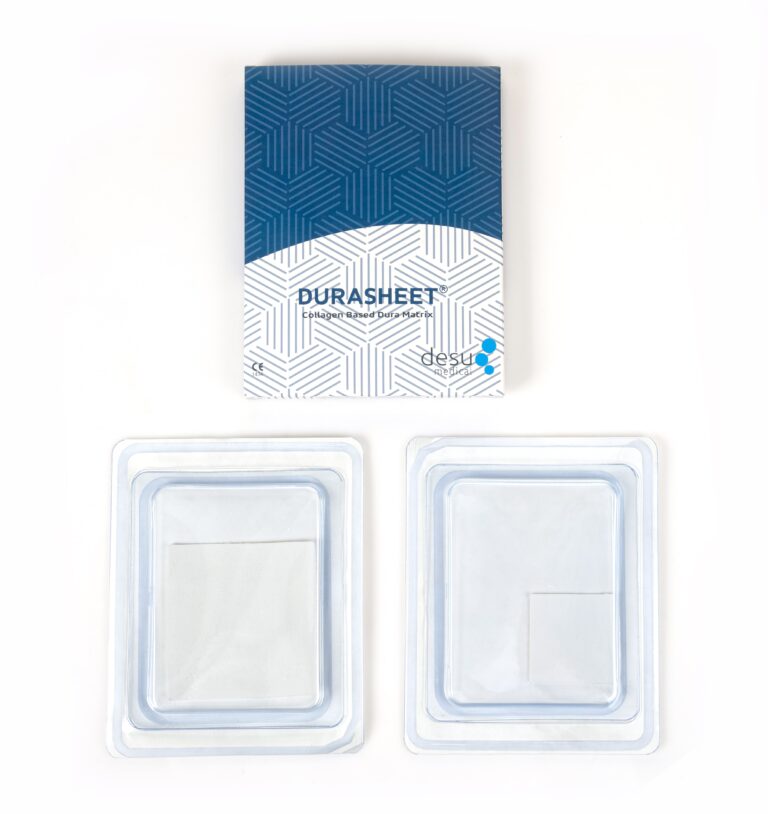
Innovations in dural graft in neurosurgery are reshaping how surgeons approach preventing postoperative complications. Newer biological materials show promise because they integrate smoothly and provoke zero chronic inflammation. This translates to fewer cases of undesirable issues, such as encapsulation or late-stage infections.
Next-generation Desu grafts are designed to match native tissue, thereby supporting more reliable healing. Surgeons appreciate these advances, believing they significantly improve patient outcomes. Additionally, the non-stick flexibility of these products prevents adhesion to the brain tissue. Early evidence points to reduced reoperation rates. Patients, therefore, benefit from safer recoveries.
The Role of Growth Factors and Bioactive Agents in Dura Regeneration
The use of bioactive properties is shaping exciting possibilities in dural graft in neurosurgery. Collagen, the base material of Desu grafts, is naturally bioactive. It encourages natural healing by stimulating cell migration (chemotaxis) and tissue integration in the area of repair. In the context of dural graft in neurosurgery, a collagen scaffold supports:
-
Cell recruitment: Attracts host fibroblasts to the graft site.
-
Angiogenesis: Promotes blood vessel formation (essential for fighting infection).
-
Neoduralization: The complete replacement of the graft with natural tissue.
Synthetic plastics cannot do this. Accordingly, the use of natural collagen remains the clinical best practice for future advancements.
Minimally Invasive Approaches Enabled by Innovative Dural Grafting Materials
Recent advancements in dural graft in neurosurgery have transformed the surgical landscape, especially for procedures requiring minimal invasion. Surgeons now have access to ultra-thin, flexible biological materials from Desu Medical that reduce tissue trauma. These modern dural graft methods support faster healing.
What sets Desu materials apart is their foldability and strength, allowing for precise placement through small keyhole incisions. Therefore, minimally invasive techniques are safer with biological grafts. By embracing innovation, neurosurgery continues to move towards procedures that balance effectiveness with patient comfort.
Clinical Outcomes and Future Perspectives in Neurosurgical Dural Repair
The use of a biological dural graft in neurosurgery has significantly transformed how surgeons address challenging cases. Patients receiving such specialized collagen repairs often experience reduced infection rates and improved wound healing.
Advancements in Desu Medical technology show promise for seamless integration with the body’s tissues. Unlike synthetics, where long-term resilience is debated due to fatigue or reaction, biological grafts are replaced by living tissue, which is the ultimate durable solution. Therefore, clinical outcomes now—and in the future—are closely linked to the adoption of regenerative biological materials.
Conclusion
In summary, the use of a biological dural graft in neurosurgery has become an invaluable tool. Through evolving materials and refined techniques, Desu Medical addresses complex challenges while supporting safer recoveries. Careful selection of resorbable materials is essential. By staying dedicated to biological innovation, neurosurgeons continue to enhance healing and restore hope.
Frequently Asked Questions
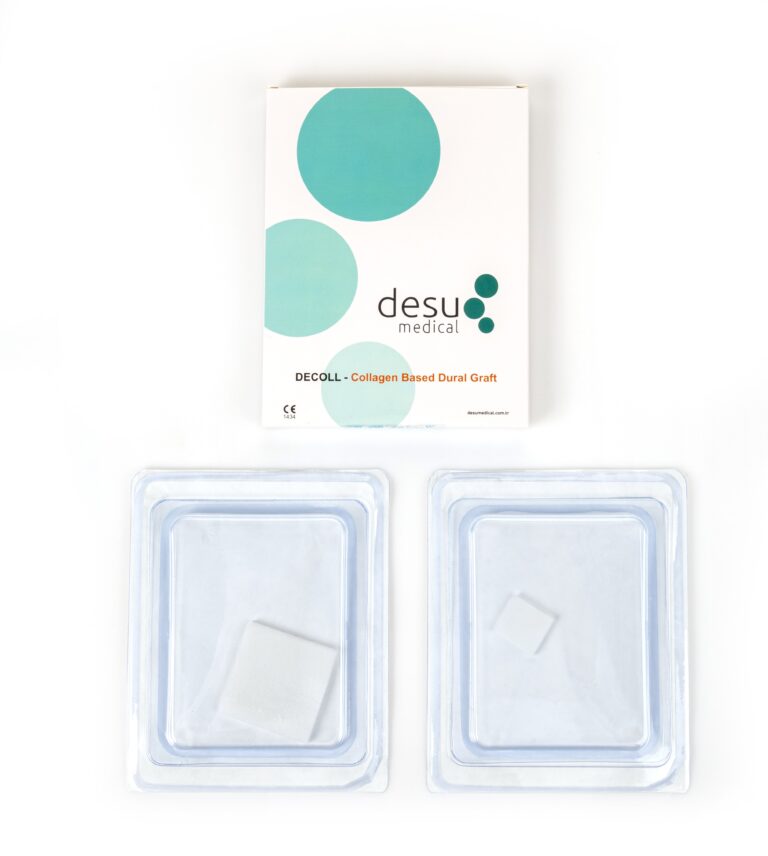
- What is a dural graft in neurosurgery? A dural graft is a material used to repair or replace the dura mater, the tough outer membrane covering the brain and spinal cord. Modern grafts, like those from Desu, are made of purified collagen.
- Why are dural grafts necessary in neurosurgery? Dural grafts are needed when the native dura mater is damaged. A high-quality graft helps prevent cerebrospinal fluid (CSF) leaks and protects the brain while new tissue grows.
- What materials are used for dural grafts? While synthetics were used in the past, the modern standard is Xenograft (purified bovine collagen), such as Desu Medical grafts, due to their safety and ability to turn into natural tissue.
- How is a dural graft implanted? The neurosurgeon cuts the Desu graft to fit the defect size. It can be sutured or placed “onlay” (without sutures) due to its excellent surface tension and conformability, creating a watertight seal.
- Are there risks or complications associated with dural grafts? Complications like infection or rejection can occur, but they are significantly rarer with biological collagen grafts compared to permanent synthetic plastics.
- How long does it take to recover from surgery involving a dural graft? Recovery depends on the surgery, but biological grafts start integrating within weeks. Unlike synthetics, they do not require a second surgery for removal or replacement in the long term.
- Can synthetic dural grafts be absorbed by the body? Most synthetic grafts are permanent plastics that stay in the brain forever. Desu biological grafts, however, are fully absorbable and are replaced by your own tissue over time.
- What signs should I watch for after surgery with a dural graft? Monitor for persistent headache or fluid drainage. However, Desu’s watertight seal technology minimizes the risk of CSF leakage significantly.
- Is there a risk of disease transmission with animal dural grafts? Desu Medical uses advanced purification and sterilization techniques that meet strict international standards, making the risk of disease transmission virtually non-existent and the material highly safe.
- Will having a dural graft impact MRI or future imaging studies? Desu biological grafts are radiotranslucent and do not cause artifacts (distortions) on MRI or CT scans, unlike some metallic or dense synthetic grafts.
