
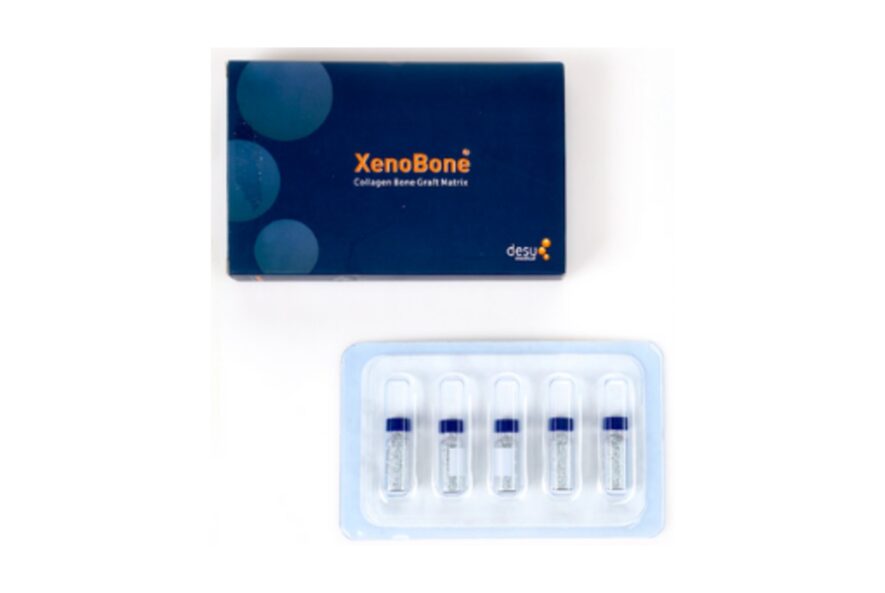
Collagen Bone Graft vs. Synthetic: Why Biological Regeneration is Superior
Bone regeneration has become a topic of significant discussion as modern techniques strive to improve recovery outcomes. Clinicians and researchers have long debated the effectiveness of various treatment modalities. However, the consensus is shifting away from purely synthetic fillers towards biological scaffolds.
In this context, the collagen bone graft vs synthetic comparison highlights a clear distinction: while synthetics act as simple void fillers, biological collagen grafts actively participate in the healing process. Hence, this article aims to provide clear insights into why Desu Medical’s collagen-based solutions are the preferred strategy for effective bone healing.
Key Points
-
Biological Advantage: Collagen bone grafts promote natural cell adhesion (osteoconduction), unlike inert synthetics.
-
Handling Properties: Desu collagen grafts are cohesive and moldable, whereas synthetics often scatter.
-
Desu Medical: Offers high-purity collagen scaffolds that combine the best of safety and regeneration.
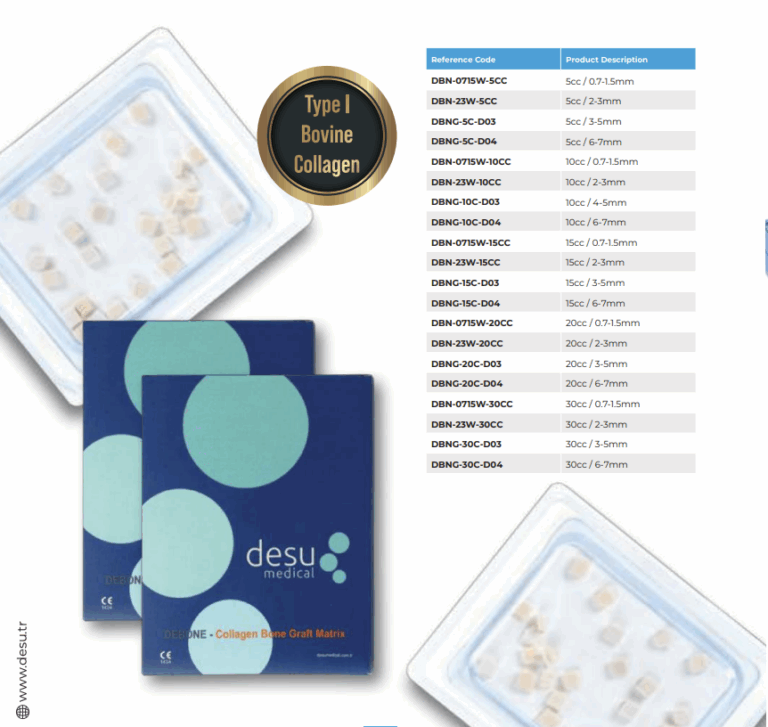
Understanding Bone Regeneration: The Role of Collagen Bone Grafts
Bone regeneration is a complex, biological field. Collagen bone grafts offer superior integration because collagen is the most abundant protein in the natural bone matrix. When practitioners compare collagen bone graft vs synthetic solutions, the biological benefits become undeniable:
-
Osteoconduction: Collagen provides a natural trellis for new bone cells to climb and grow.
-
Hemostasis: Collagen naturally helps control bleeding, a feature synthetics lack.
-
Bio-mimicry: It mimics the body’s own tissue, reducing foreign body reactions.
Therefore, while synthetic granules have their uses, Desu Medical’s collagen-based grafts provide the essential biological environment required for true regeneration, significantly contributing to improved patient outcomes.
Comparative Analysis: Why Biology Beats Pure Synthetics
The comparative analysis reveals that biological options offer unique benefits that address the limitations of synthetics.
For instance, purely synthetic materials (like TCP or HA granules) provide volume but lack cohesion; they can wash away with blood flow.
Collagen bone grafts, however, act as a binder. They hold the mineral particles together, creating a stable, putty-like mass that stays where the surgeon places it. Therefore, practitioners favor collagen-based approaches for their superior handling and adaptability. Unlike permanent synthetics that may remain as foreign bodies, Desu collagen grafts are fully resorbed and replaced by the patient’s own bone over time.
Material Science in Orthopaedics: The Hybrid Revolution
Advancements in materials science are transforming orthopaedic practice by combining minerals with biological collagen matrices. Clinicians now evaluate options such as Desu’s collagen-mineral grafts, which balance the strength of minerals with the regenerative potential of collagen.
While synthetic fillers are merely “space holders,” collagen scaffolds actively invite vascularization (blood vessel growth). This distinction is vital. Research continues to inspire tailored, progressive treatment strategies where biological integration is the priority. These advancements by Desu Medical undoubtedly enhance patient care while challenging conventional, purely synthetic methods.
Long-Term Outcomes: Resorption vs. Permanence
Recent studies offer valuable insights into maintaining optimal bone regeneration. In clinical comparisons of collagen bone graft vs synthetic performance, the long-term goal is “Restitutio ad integrum”—complete restoration.
-
Synthetics: Often stay in the body for years, sometimes becoming encapsulated by fibrous tissue.
-
Collagen (Desu): Undergoes controlled resorption, gradually being replaced by natural bone.
Therefore, experts review collagen bone graft durability as a temporary bridge that leads to permanent natural bone. This significantly influences patient recovery, preventing the long-term risks associated with permanent foreign implants.
Clinical Insights: Choosing the Best Bone Graft
Clinicians increasingly opt for biologically sound solutions. Evaluating regenerative potential becomes paramount when considering options.
A measured approach integrates advanced protocols, embracing Desu Medical’s collagen technology. Unlike loose synthetic granules that are difficult to manage, collagen bone grafts offer a cohesive structure that simplifies surgery. Ultimately, the decision favors strategies that harmonize clinical experience with biological principles—making collagen the standard of care.
Conclusion
In summary, our exploration highlights that biological collagen bone grafts offer distinct advantages over purely synthetic options. Understanding these differences helps in tailoring treatments to individual needs, prioritizing natural healing over artificial filling. Ultimately, informed choices make a significant difference, and the biological insights provided by Desu Medical serve to guide future decisions with confidence and care.
Frequently Asked Questions
What is a collagen bone graft?
A collagen bone graft is a regenerative material that utilizes purified type-1 collagen (often combined with minerals) to support bone growth. It acts as a scaffold, encouraging new bone tissue to grow into the defect (osteoconduction).
What are synthetic bone grafts?
Synthetic bone grafts are man-made ceramic or polymer materials designed to fill voids. While they provide volume, they often lack biological activity and can be brittle or difficult to handle compared to collagen-based options.
How do collagen bone grafts and synthetic bone grafts compare?
Collagen bone grafts (Desu) are praised for their natural biomimicry, cohesiveness (moldability), and ability to stop bleeding. Synthetic grafts are often loose granules that scatter easily and do not support cell attachment as effectively as collagen.
What are the advantages of using Desu Collagen Bone Grafts?
The advantages include excellent biocompatibility, the ability to hold the graft together in a stable mass (preventing migration), and a structure that facilitates rapid vascular in-growth and complete bone remodeling.
Are there any risks of disease with biological grafts?
Desu Medical utilizes advanced purification and sterilization technologies that remove all immunogenic components and viruses. This makes Desu biological grafts extremely safe, offering the benefits of nature without the risks of traditional allografts.
If you would like to receive detailed information about DESU Medical products or explore distributorship and partnership opportunities, please do not hesitate to contact us.
For sales inquiries, product catalogs, and distributorship requests, you may reach us directly at [email protected]
For more information, visit Desu.
