
When a neurosurgeon or a hospital evaluates a collagen dural graft, one of the first questions is about bovine collagen safety. The question is reasonable. Collagen grafts are made from animal tissue, and the history of bovine spongiform encephalopathy (BSE) in the 1980s and 1990s made the medical device sector rethink how animal-derived materials are sourced and processed. Today, bovine collagen safety is managed through a structured framework of international standards and regulations. This article explains how that framework works and what documentation a hospital can reasonably expect from a manufacturer.
Why Animal Origin Requires Specific Controls
Two families of risk are associated with materials of animal origin. The first is conventional contamination by bacteria, fungi or viruses. The second is transmissible spongiform encephalopathies (TSEs), a group of diseases caused by misfolded prion proteins, of which BSE is the bovine form. Prions are unusually resistant to many conventional inactivation methods, so TSE risk cannot be handled by sterilisation alone. It has to be controlled at every step, starting with the choice of animal and tissue.
The ISO 22442 Series
The international framework for medical devices made with animal tissue is the ISO 22442 series, Medical devices utilizing animal tissues and their derivatives. It has three main parts:
- Part 1, application of risk management: requires the manufacturer to identify, evaluate and control the risks arising from the animal material throughout the device life cycle.
- Part 2, controls on sourcing, collection and handling: sets requirements for the origin of animals, veterinary control, traceability and the handling of tissue before processing.
- Part 3, validation of the elimination and/or inactivation of viruses and TSE agents: describes how manufacturers demonstrate that their process steps reduce these agents.
These standards work together with the general risk management standard for medical devices, ISO 14971, and with the quality management requirements of ISO 13485.
European Requirements for Devices Utilising Animal Tissue
In the European Union, devices manufactured utilising tissues of animal origin are subject to specific requirements in addition to the general device rules. Commission Regulation (EU) No 722/2012 sets out particular requirements regarding TSE risk for such devices, and under the Medical Device Regulation (EU) 2017/745 devices made from non-viable animal tissue are placed in the highest risk class, Class III. In practice this means notified body review of the manufacturer’s TSE risk assessment, sourcing controls and process validation.
How Sourcing Reduces Risk
Bovine collagen safety begins long before manufacturing. Key elements of a controlled supply chain include:
- Geographical origin: animals are sourced from countries whose BSE risk status is assessed and documented.
- Tissue selection: tissues are classified by their potential TSE infectivity, and collagen for implants is taken from low-risk tissue categories rather than from nervous tissue.
- Veterinary control: animals are inspected and declared fit for human consumption under official veterinary supervision.
- Traceability: each batch of raw material can be traced back to its source, and each finished device can be traced to its raw material lot.
How Processing Contributes to Bovine Collagen Safety
Processing serves two purposes at once. It purifies the collagen, removing non-collagenous proteins, lipids and cellular material that could provoke an immune response, and it includes steps whose capacity to reduce viruses and TSE agents can be evaluated under ISO 22442-3. The finished device is then terminally sterilised. For Desu collagen dura membranes this is done by gamma irradiation, which is described in our article on gamma sterilisation of collagen dura membranes.
No responsible manufacturer claims that any biological material carries zero theoretical risk. The objective of the framework is to reduce residual risk to a level that is acceptable when weighed against the clinical benefit, and to document that reasoning transparently.
What Hospitals Can Ask For
Value analysis committees and surgeons can reasonably request the following from a supplier of bovine collagen dural grafts:
- the CE certificate and the EU declaration of conformity, with the notified body identified;
- a statement of the animal species, tissue type and geographical origin;
- a summary of the TSE risk assessment and of the standards applied, such as the ISO 22442 series;
- information on the sterilisation method and its validation;
- biocompatibility evidence, usually summarised against ISO 10993.
Our procurement checklist and our guide to ISO 10993 biocompatibility cover the related questions.
Bovine Collagen at Desu
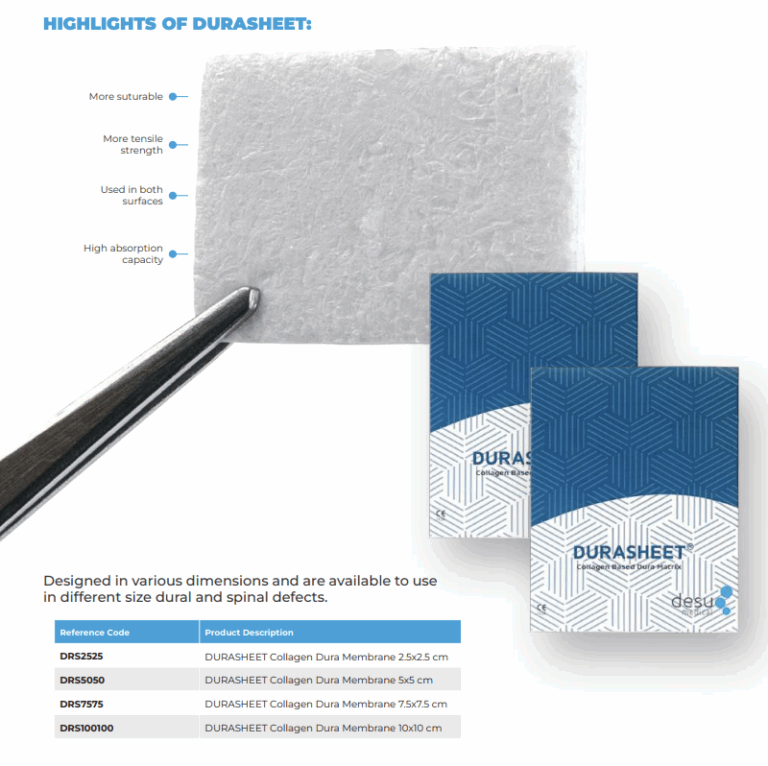
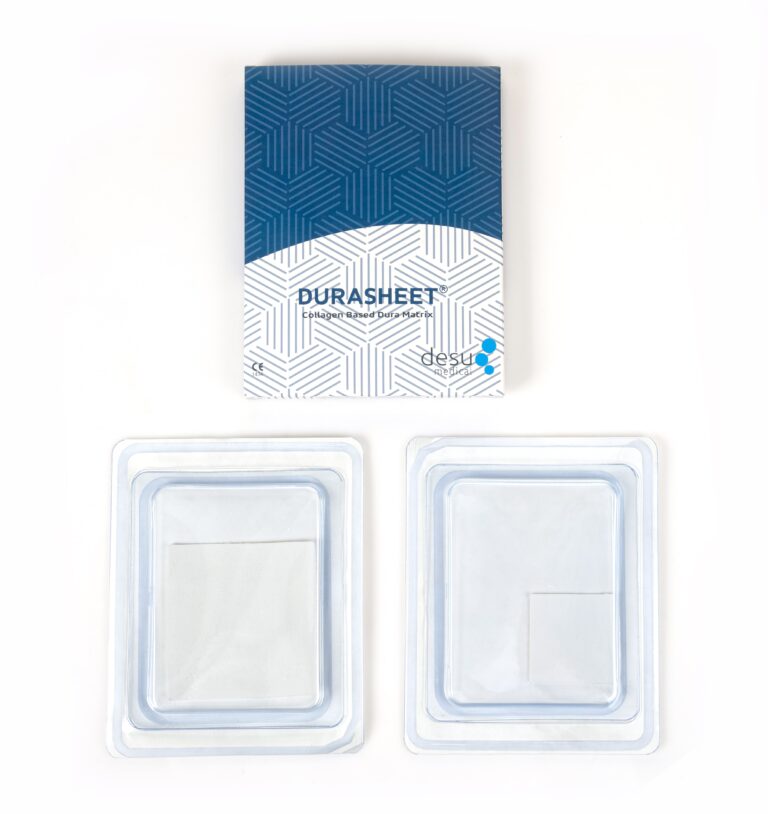
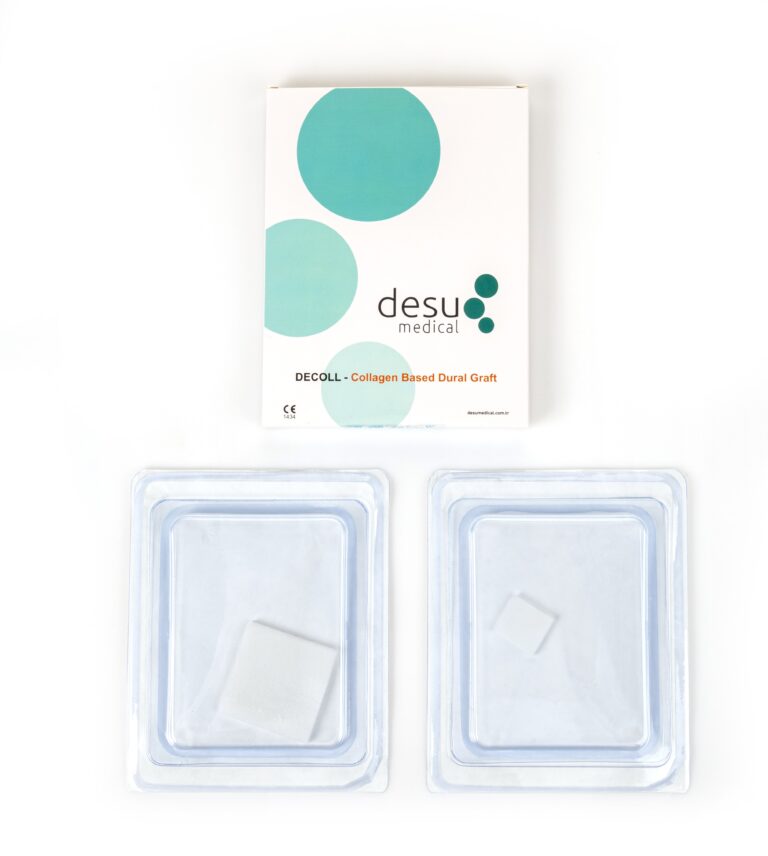
Desu manufactures its DURASHEET and DECOLL collagen dura membranes from natural, pure Type I bovine collagen sourced from controlled, traceable tissue. Production operates under an ISO 13485 quality management system, the dural graft range is CE certified, and technical documentation is available to institutions on request.
Discussing Animal Origin with Patients
Some patients have personal, dietary or religious considerations about bovine-derived implants. Bovine collagen safety is only one part of informed consent; the origin of the material is another. Surgical teams can address this openly during consent so that patients understand what the graft is made of and what alternatives exist.
Frequently Asked Questions
Can a bovine collagen dural graft transmit BSE?
The theoretical risk is controlled through sourcing from assessed regions and low-risk tissues, veterinary control, traceability and validated processing under standards such as the ISO 22442 series. The residual risk is evaluated and documented as part of the device’s regulatory review.
Which standards apply to bovine collagen safety?
The ISO 22442 series covers risk management, sourcing controls and validation of virus and TSE agent reduction. In the EU, Regulation (EU) No 722/2012 and the Medical Device Regulation also apply to devices made with animal tissue.
Is bovine collagen used in other medical devices?
Yes. Purified bovine collagen is used in haemostatic products, wound dressings, dental membranes and bone graft matrices, in addition to dural grafts.
References and Further Reading
- Commission Regulation (EU) No 722/2012 on devices manufactured utilising tissues of animal origin (EUR-Lex)
- Regulation (EU) 2017/745 on medical devices (EUR-Lex)
- ISO 22442-1, -2 and -3: Medical devices utilizing animal tissues and their derivatives
- ISO 14971: Medical devices – Application of risk management to medical devices
About this article
Prepared by the Desu Medical editorial team. Desu Medical has designed and manufactured neurosurgical devices in Ankara, Türkiye, since 2007, including the DURASHEET and DECOLL collagen dura membranes, which are made from natural, pure Type I bovine collagen. Manufacturing operates under an ISO 13485 quality management system and the dural graft range is CE certified. This article is written for healthcare professionals and general information; it does not replace the Instructions for Use or clinical judgement. Last reviewed: October 2026.

1 Comment
Collagen Dural Graft: Clear Answers to 10 Patient Questions
[…] These products must meet strict European regulations before they can be used. Our article on bovine collagen safety explains the controls in […]