
If you are having brain or spine surgery, your surgeon may mention that a collagen dural graft could be used to repair the membrane that surrounds the brain and spinal cord. It is natural to have questions about this. This article answers the questions patients and families ask most often. It is general information only; your surgeon is the right person to discuss your own operation.
1. What Is the Dura?
The dura mater is a tough membrane that surrounds the brain and spinal cord. It holds in the cerebrospinal fluid (CSF), the clear fluid that cushions the nervous system. During many operations the surgeon has to open the dura to reach the area being treated. At the end of the operation the dura is closed again. Our article on dura mater anatomy and repair explains this in more detail.
2. Why Might I Need a Graft?
Sometimes the dura cannot be closed directly. Part of it may have been removed with a tumour, it may be too thin or damaged, or the surgeon may need to make more room, as in some Chiari operations. In these cases a patch, called a dural graft, is used to close the gap so that CSF does not leak.
3. What Is a Collagen Dural Graft Made Of?
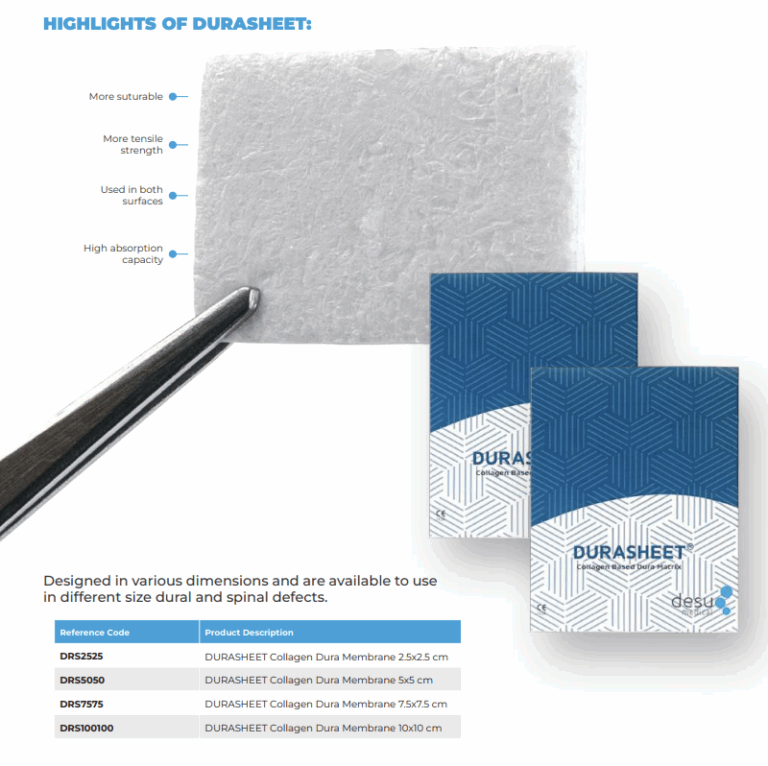
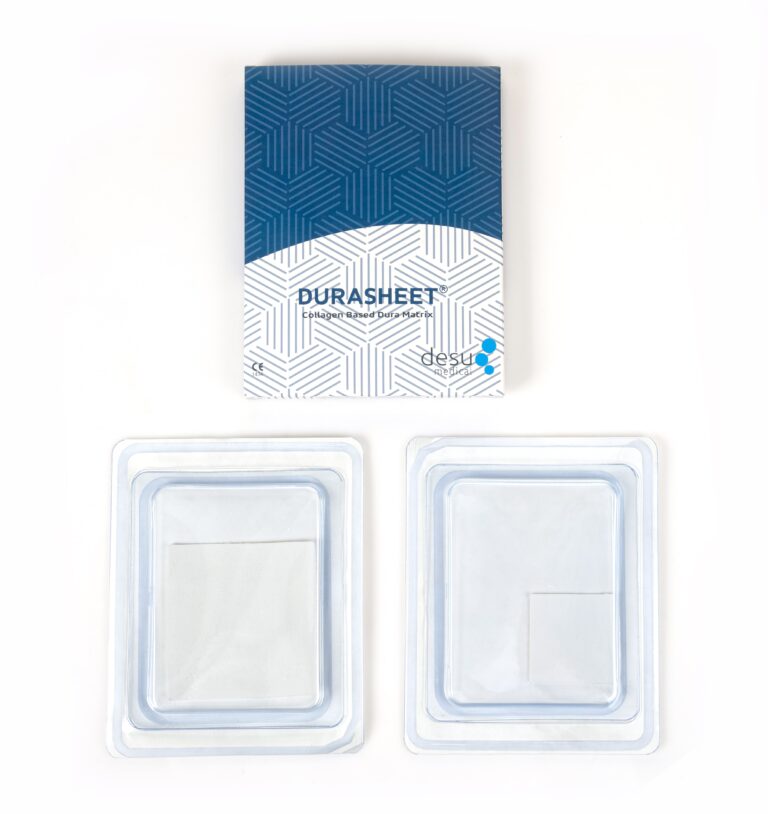
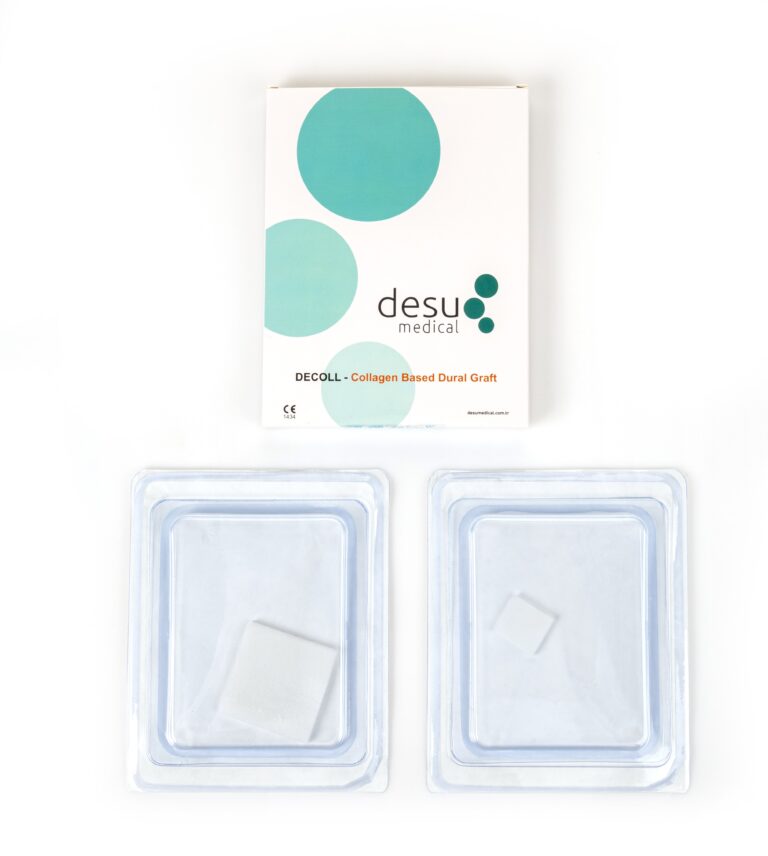
A collagen dural graft is a thin sheet made from collagen, a natural protein found in skin, tendons and the dura itself. The grafts made by Desu Medical, called DURASHEET and DECOLL, are made from natural, pure Type I collagen of bovine (cattle) origin. They are not made from synthetic plastics.
4. What Happens to the Graft in My Body?
The graft acts as a scaffold. Over time your body’s own cells grow into it and lay down new connective tissue, while the collagen of the graft is gradually broken down and absorbed. Eventually the area is repaired with your own tissue. You will not feel the graft.
5. Is Bovine Collagen Safe?
Collagen of bovine origin has been used in medical products for many years. For implants, the raw material must come from controlled sources, and the manufacturing process includes steps designed to reduce risks from the animal material. These products must meet strict European regulations before they can be used. Our article on bovine collagen safety explains the controls in place.
6. Can I Be Allergic to It?
Allergic reactions to purified collagen implants are uncommon, and the materials are tested for biocompatibility. If you have known allergies, especially to bovine products or collagen, tell your surgeon before the operation.
7. I Have Religious or Dietary Concerns About Bovine Products
Some patients have personal, religious or dietary reasons for wanting to know whether a material is of animal origin. Please raise this with your surgical team before the operation, so that they can explain the options available for your situation.
8. Will the Graft Show on Scans?
After surgery, scans such as MRI may show changes in the area of the repair as the graft is replaced by your own tissue. Your doctors are familiar with these appearances. A collagen dural graft contains no metal and does not prevent you from having MRI scans.
9. What Should I Look Out for After Surgery?
Contact your surgical team promptly if you notice:
- Clear fluid leaking from the wound or dripping from the nose.
- A swelling under the wound that is growing.
- Headache that is much worse when you sit or stand and better when you lie down.
- Fever, redness or discharge from the wound, or a stiff neck.
These signs may indicate a CSF leak or infection and need to be checked.
10. Will I Have a Record of the Graft?
Yes. Every collagen dural graft has a lot number, and the hospital records which product was used in your operation. Depending on local rules, you may also receive implant information to keep. This traceability is explained in our article on dural graft traceability.
Recovery After Dural Repair
Recovery depends mainly on the operation you are having, not on the graft itself. Your surgeon may ask you to avoid straining, heavy lifting or blowing your nose for a period, especially after spine or skull base surgery, to reduce pressure on the repair while it heals. Follow the specific advice you are given and attend your follow-up appointments.
Questions to Ask Your Surgeon
- Is it likely that a graft will be needed in my operation?
- What type of graft do you usually use, and why?
- Is it of animal origin, and are there alternatives if I have concerns?
- What should I avoid during recovery, and for how long?
Summary
A collagen dural graft is a natural patch used to close a gap in the membrane around the brain or spinal cord. It is gradually replaced by your own tissue. If you have concerns about allergies, animal-derived materials or your recovery, your surgical team will be glad to discuss them with you.
Frequently Asked Questions
Will I feel the collagen dural graft?
No. The graft lies inside, over the brain or spinal cord, and is gradually replaced by your own tissue. You will not feel it.
Can I have MRI scans after a collagen dural graft?
Yes. A collagen dural graft contains no metal and does not prevent MRI scanning.
Is the graft removed later?
No. A collagen graft does not need to be removed. It is gradually absorbed as your own tissue forms in its place.
References and Further Reading
- MedlinePlus: Brain surgery
- PubMed: collagen dural graft outcomes
- Desu Medical, DURASHEET collagen dura membrane
About this article
Prepared by the Desu Medical editorial team. Desu Medical has designed and manufactured neurosurgical devices in Ankara, Türkiye, since 2007, including the DURASHEET and DECOLL collagen dura membranes, which are made from natural, pure Type I bovine collagen. Manufacturing operates under an ISO 13485 quality management system and the dural graft range is CE certified. This article is written for healthcare professionals and general information; it does not replace the Instructions for Use or clinical judgement. Last reviewed: October 2026.
