
A dural graft is placed directly over the brain or spinal cord, so it must be sterile when the package is opened. Desu collagen dura membranes are terminally sterilised by gamma sterilisation, also called gamma irradiation. This article explains what gamma sterilisation is, how the radiation dose is validated, why it is well suited to collagen, and what the operating room team needs to know when handling a gamma sterilised graft.
Terminal Sterilisation vs Aseptic Processing
There are two broad ways to deliver a sterile device. In aseptic processing, components are sterilised separately and assembled in a controlled clean environment. In terminal sterilisation, the device is sealed in its final package and then sterilised. Terminal sterilisation is preferred whenever the material can tolerate it, because the sterile barrier is never opened after the sterilising step.
How Gamma Sterilisation Works
Gamma sterilisation uses high-energy photons, usually from a cobalt-60 source. The radiation penetrates the packaging and the device and damages the DNA of microorganisms, so they can no longer reproduce. Because gamma rays penetrate deeply, sealed boxes of finished products can be processed without opening them, and no heat or moisture is involved.
Gamma sterilisation leaves no chemical residue in the device. This is a practical difference from ethylene oxide, which requires aeration and residue limits under ISO 10993-7.
Validating the Dose: ISO 11137
The radiation dose is not chosen arbitrarily. The ISO 11137 series describes how manufacturers establish and validate it. The process starts with bioburden testing, which measures the number and type of microorganisms on the product before sterilisation. A sterilisation dose is then set using methods described in ISO 11137-2, and verified so that the product reaches the required sterility assurance level. Routine control includes dosimetry for each batch and periodic dose audits.
The sterility assurance level used for terminally sterilised devices is a probability of no more than one non-sterile unit in a million. This is the level referred to when a device label carries the STERILE R symbol, where R stands for radiation.
Why Gamma Sterilisation Suits Collagen
Collagen is a protein, and proteins are sensitive to heat. Steam sterilisation would denature collagen into gelatin and destroy the fibrillar structure that makes a collagen graft work. Gamma sterilisation avoids heat, which is why it is widely used for collagen-based implants.
Radiation can still affect collagen at the molecular level, causing some chain scission or crosslinking. The validation therefore also confirms that, at the chosen dose, the membrane keeps its physical properties, handling characteristics and biological performance. Testing on the final, gamma sterilised device is part of the biological evaluation described in our guide to ISO 10993 for dural grafts.
Gamma, Electron Beam and Ethylene Oxide Compared
Three sterilisation methods are common for single-use devices that cannot be steam sterilised:
- Gamma sterilisation: deep penetration, suitable for dense or boxed products, no residues, no heat. The main consideration is the effect of radiation on sensitive materials, which is addressed during validation.
- Electron beam (e-beam): also ionising radiation, with very short processing times but more limited penetration, which can make it less suitable for dense loads.
- Ethylene oxide: a low-temperature gas process compatible with many materials, but it requires aeration time and control of chemical residues under ISO 10993-7.
For a protein membrane such as collagen, the absence of heat and chemical residues makes gamma sterilisation a well-established choice, provided the dose is validated so that the material keeps its structure.
Packaging and Shelf Life
A sterile device is only as good as its sterile barrier. Packaging for terminally sterilised devices is validated under ISO 11607, which covers materials, sealing and the ability to maintain sterility through transport and storage. Accelerated and real-time ageing studies support the expiry date printed on the label.
Reading the Label
The label of a gamma sterilised graft uses standard symbols defined in ISO 15223-1. The most relevant ones are STERILE R, which indicates sterilisation by irradiation; the crossed-out “2”, meaning do not re-use; the symbol for do not resterilise; the expiry date; and the lot number. A broken or damaged package symbol reminds the user not to use the device if the sterile barrier has been compromised. Recording the lot number in the patient file is part of implant traceability.
Gamma Sterilisation in the Operating Room
For the surgical team, a gamma sterilised collagen membrane brings a few simple rules:
- Check the expiry date and the integrity of the sterile barrier before opening.
- Open using aseptic technique and pass the inner package to the sterile field.
- Do not resterilise. A single-use collagen graft is validated for one sterilisation cycle only.
- Discard any unused portion of an opened membrane.
Our article on dural graft handling in the operating room covers opening, trimming and placement in more detail.
Desu Collagen Dura Membranes
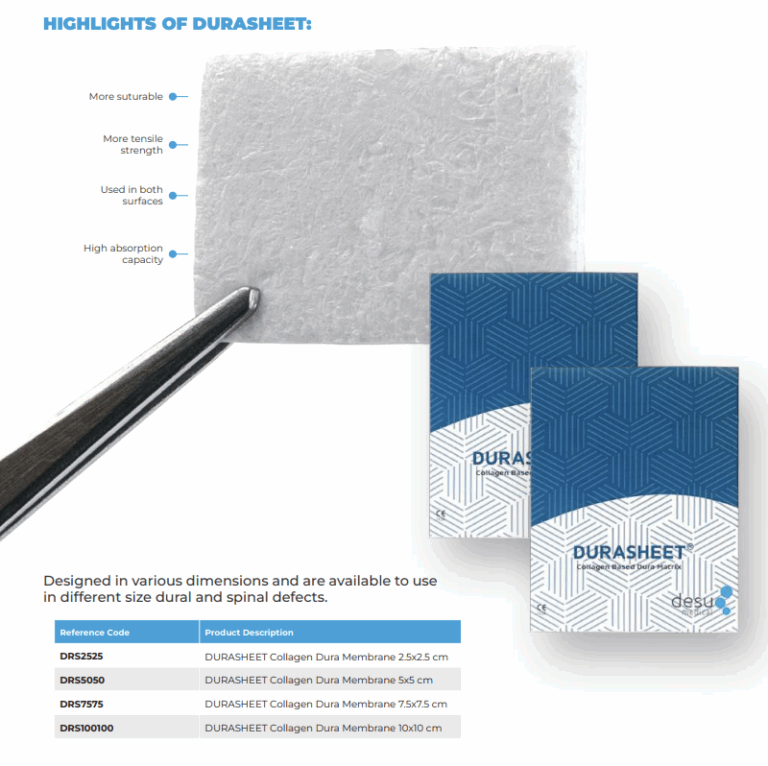
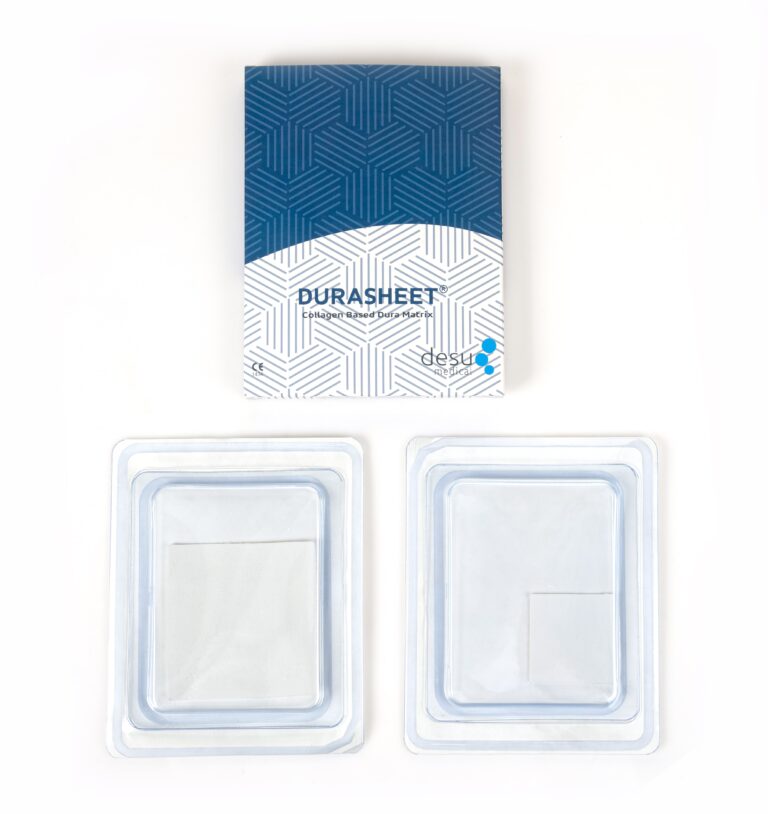
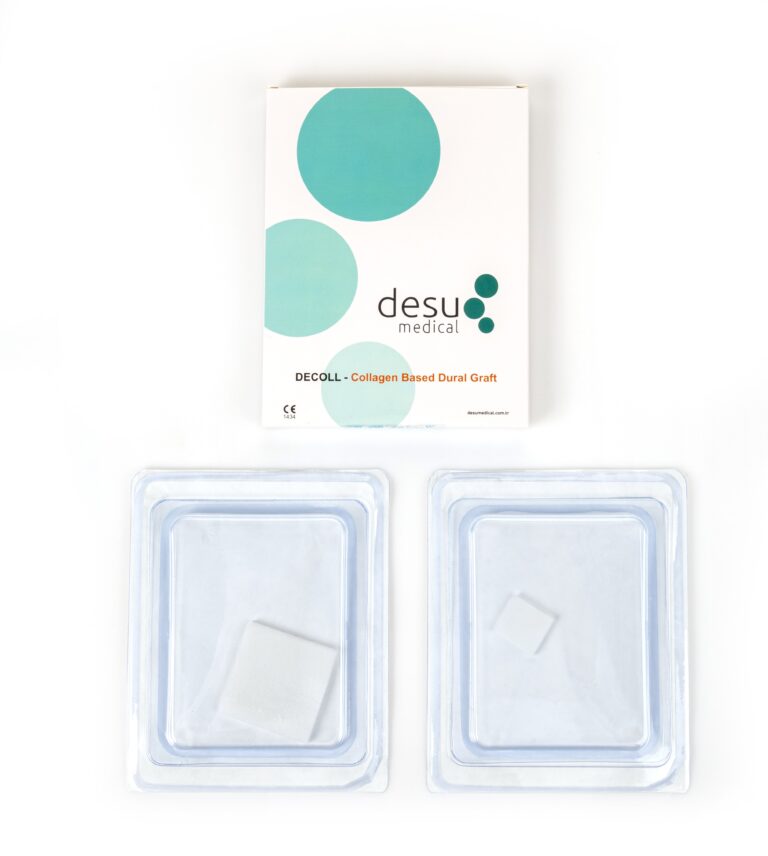
Desu’s DURASHEET and DECOLL membranes are made from natural, pure Type I bovine collagen and are terminally sterilised by gamma sterilisation. They are single-use and supplied ready to use, with no pre-treatment required before implantation.
Frequently Asked Questions
Can a collagen dural graft be resterilised?
No. Collagen grafts are single-use and validated for one sterilisation cycle. Resterilisation could change the material and is not permitted.
Why is steam not used for collagen grafts?
Steam sterilisation relies on high temperature, which denatures collagen and destroys the fibrillar structure the graft needs. Gamma sterilisation does not use heat.
Does gamma sterilisation make the product radioactive?
No. Gamma sterilisation does not make the product radioactive and leaves no chemical residue.
References and Further Reading
- ISO 11137-1 and -2: Sterilization of health care products – Radiation
- ISO 11607-1: Packaging for terminally sterilized medical devices
- ISO 10993-7: Ethylene oxide sterilization residuals
- PubMed: gamma irradiation and collagen
About this article
Prepared by the Desu Medical editorial team. Desu Medical has designed and manufactured neurosurgical devices in Ankara, Türkiye, since 2007, including the DURASHEET and DECOLL collagen dura membranes, which are made from natural, pure Type I bovine collagen. Manufacturing operates under an ISO 13485 quality management system and the dural graft range is CE certified. This article is written for healthcare professionals and general information; it does not replace the Instructions for Use or clinical judgement. Last reviewed: October 2026.

Comments (3)
Dural Repair Glossary: Clear Definitions of 35 Key Terms
[…] Gamma sterilisation: sterilisation with gamma radiation. See gamma sterilisation of collagen dura membranes. […]
Collagen Dura Membrane Quality: Source to Implant (ISO 13485)
[…] to show that it reliably achieves sterility without damaging the collagen. See our article on gamma sterilisation of collagen dura membranes for more […]
Bovine Collagen Safety: Clear ISO 22442 Controls for Dural Grafts
[…] Processing serves two purposes at once. It purifies the collagen, removing non-collagenous proteins, lipids and cellular material that could provoke an immune response, and it includes steps whose capacity to reduce viruses and TSE agents can be evaluated under ISO 22442-3. The finished device is then terminally sterilised. For Desu collagen dura membranes this is done by gamma irradiation, which is described in our article on gamma sterilisation of collagen dura membranes. […]