
Dural grafts sit in one of the most tightly regulated categories of medical devices in Europe. Under the EU MDR, the Medical Device Regulation (EU) 2017/745, a collagen dural graft made from animal tissue is a Class III device. For surgeons and procurement teams, understanding what that classification means helps when comparing products and reviewing supplier documentation. This article summarises the main EU MDR requirements that apply to dural grafts and the documents a hospital can check.
Why Dural Grafts Are Class III Under the EU MDR
The EU MDR classifies devices using the rules in Annex VIII. Two rules place collagen dural grafts in Class III:
- Rule 8: implantable devices that are in direct contact with the central nervous system are Class III.
- Rule 18: devices manufactured utilising non-viable tissues or cells of animal origin, or their derivatives, are Class III, unless they are intended to contact intact skin only.
Either rule alone would be sufficient. A dural graft made from bovine collagen meets both, which reflects the combination of its anatomical location and its biological origin.
Notified Body Review
Class III devices cannot be placed on the EU market on the manufacturer’s own declaration. A notified body, an independent organisation designated by an EU member state, audits the manufacturer’s quality management system and assesses the technical documentation of the device. For devices made with animal tissue, this review also covers the TSE risk assessment and the validation of the manufacturing process, as described in our article on bovine collagen safety.
The four-digit number of the notified body appears next to the CE mark on the label. Hospitals can check the scope of the certificate and the identity of the notified body against the NANDO database published by the European Commission.
Clinical Evaluation and Post-Market Clinical Follow-Up
The EU MDR requires every device to be supported by a clinical evaluation that demonstrates safety, performance and an acceptable benefit-risk profile. For Class III implants the expectations are high: the evaluation draws on clinical investigations, published literature and data from comparable devices where equivalence can be demonstrated. Once the device is on the market, the manufacturer must run post-market clinical follow-up (PMCF) to keep collecting clinical data and update the evaluation.
Summary of Safety and Clinical Performance
For implantable and Class III devices, the EU MDR requires a Summary of Safety and Clinical Performance (SSCP). This is a public document, validated by the notified body, that summarises the intended purpose, the clinical evidence, residual risks and undesirable effects in language that healthcare professionals, and where relevant patients, can understand. Once the European database EUDAMED is fully operational, SSCPs are made available there.
UDI and Traceability
Every device placed on the market under the EU MDR carries a Unique Device Identifier (UDI). The UDI combines a device identifier, which identifies the model, and a production identifier, which includes the lot or serial number and the expiry date. Health institutions are expected to store the UDI of implantable devices they supply or receive. Our article on dural graft traceability explains how this works in practice.
Implant Cards
Article 18 of the EU MDR requires manufacturers of implantable devices to provide an implant card and information for the patient, with a limited list of exemptions such as sutures, staples and screws. The implant card identifies the device and allows the patient to inform other healthcare providers about it. Hospitals complete the card with the patient’s details and hand it over after surgery.
Post-Market Surveillance and Vigilance
Under the EU MDR, manufacturers of Class III devices must maintain a post-market surveillance system and prepare a Periodic Safety Update Report (PSUR) that is reviewed by the notified body. Serious incidents must be reported to the competent authorities. Hospitals contribute by reporting device-related incidents through their national vigilance systems and by keeping traceability records that make field safety corrective actions possible.
Transition from the Medical Device Directives
The EU MDR has applied since 26 May 2021, replacing the earlier Medical Device Directives. To avoid shortages, the transition period for devices with valid certificates under the old directives was extended by Regulation (EU) 2023/607, with later deadlines for Class III and implantable devices than for lower risk classes, subject to conditions such as an ongoing application with a notified body. In practice, a hospital may therefore see some dural grafts supplied under an EU MDR certificate and others under a legacy directive certificate. Both can be lawfully on the market during the transition, but it is worth checking which applies and when it expires.
A Practical Checklist for Hospitals
- CE certificate with the notified body named and the device within the certificate scope;
- EU declaration of conformity;
- Instructions for Use and label, including UDI;
- implant card and patient information;
- SSCP, when available;
- summaries of biocompatibility and TSE risk management.
Desu Dural Grafts
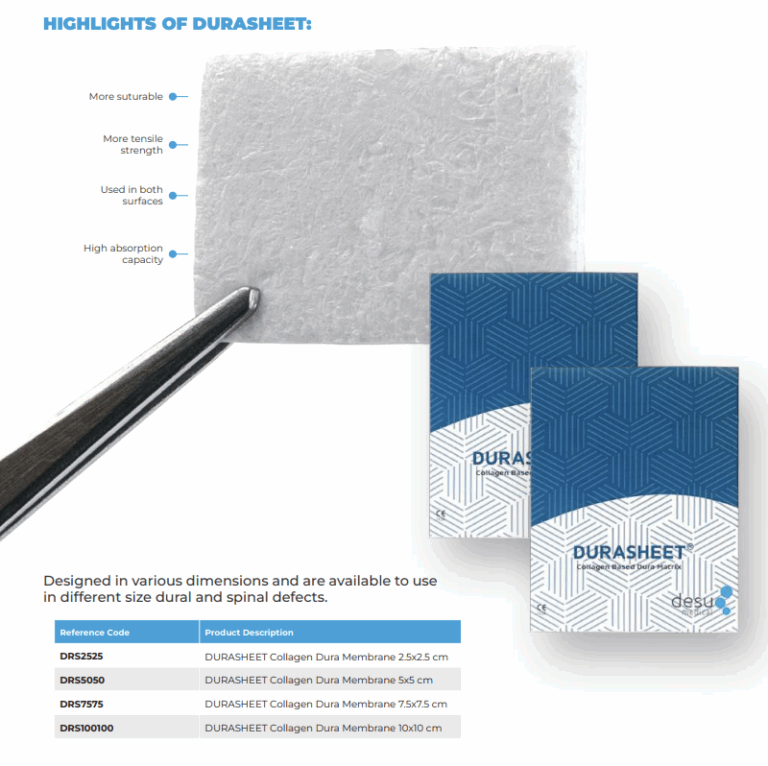
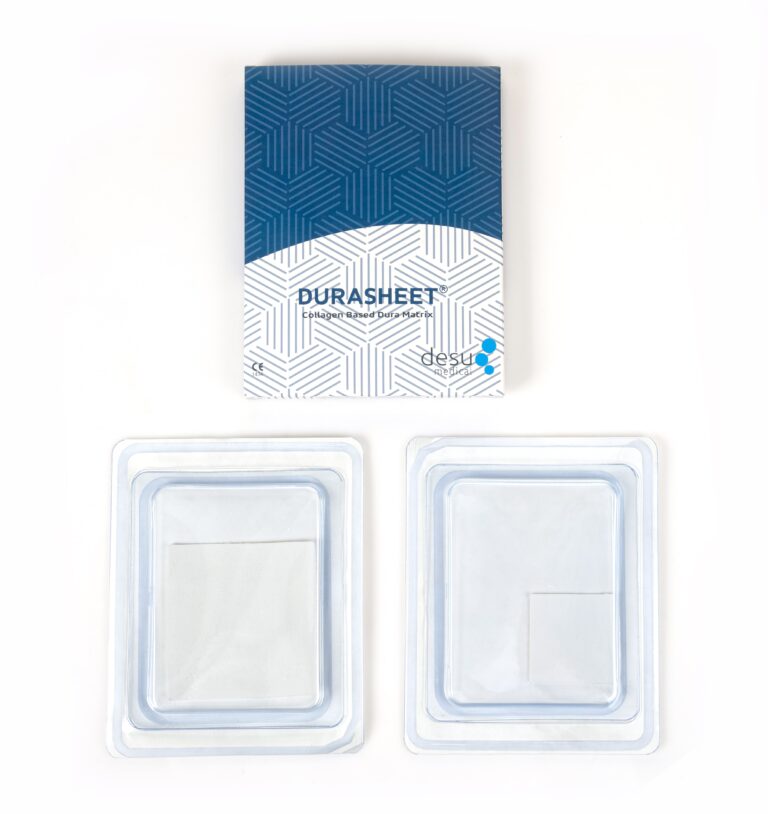
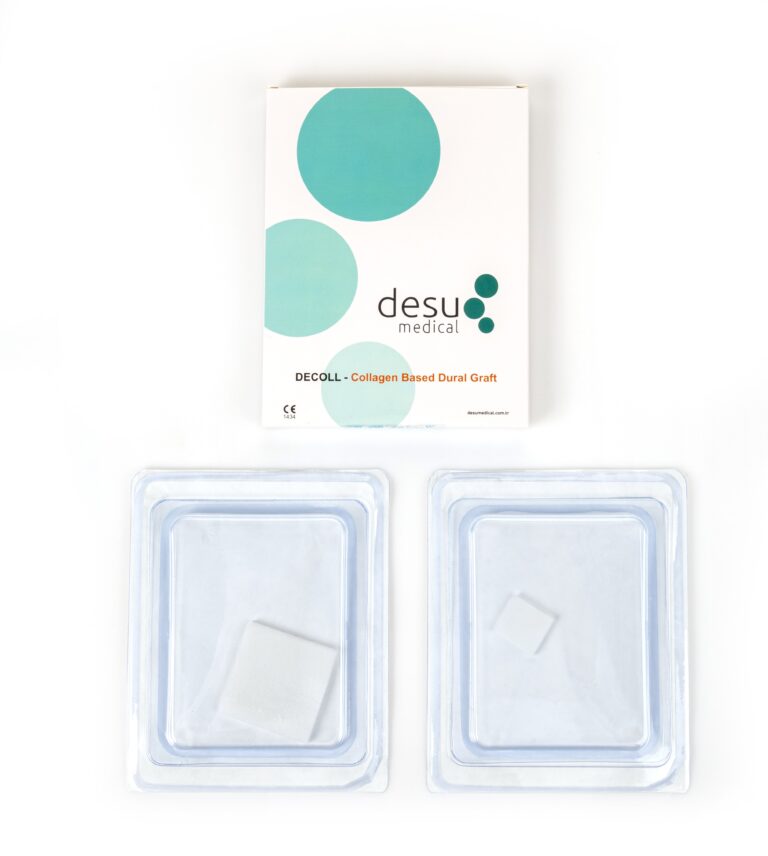
Desu’s DURASHEET and DECOLL collagen dura membranes are made from natural, pure Type I bovine collagen. The dural graft range is CE certified and manufactured under an ISO 13485 quality management system, and regulatory documentation is available to institutions on request.
Frequently Asked Questions
Is a collagen dural graft a Class III device under the EU MDR?
Yes. It is an implant in contact with the central nervous system (Rule 8) and is made from non-viable animal tissue (Rule 18), and both rules lead to Class III.
Where can I check a notified body?
The notified body number appears next to the CE mark. The European Commission’s NANDO database lists designated notified bodies and the scope of their designation.
Does a dural graft come with an implant card?
Implantable devices generally require an implant card under Article 18 of the EU MDR, apart from listed exemptions. Check the device labelling and packaging for the card supplied by the manufacturer.
References and Further Reading
- Regulation (EU) 2017/745 on medical devices (EUR-Lex)
- Commission Regulation (EU) No 722/2012 (EUR-Lex)
- European Commission, NANDO database of notified bodies
- ISO 13485: Medical devices – Quality management systems
About this article
Prepared by the Desu Medical editorial team. Desu Medical has designed and manufactured neurosurgical devices in Ankara, Türkiye, since 2007, including the DURASHEET and DECOLL collagen dura membranes, which are made from natural, pure Type I bovine collagen. Manufacturing operates under an ISO 13485 quality management system and the dural graft range is CE certified. This article is written for healthcare professionals and general information; it does not replace the Instructions for Use or clinical judgement. Last reviewed: October 2026.
