
Kolajen Dura Membran Nasıl Üretilir: Doğal Kolajenden Steril İmplanta

Kaynak dokudan steril implanta uzanan üretim zinciri: izlenebilir tedarik, saflaştırma, matris oluşturma, gama sterilizasyonu ve kalite kontrol.
Öne Çıkanlar
- Üretim zinciri, izlenebilir kaynak dokunun kontrollü tedarikiyle başlar.
- Saflaştırma adımı, yabancı protein ve hücresel kalıntıların uzaklaştırılmasını hedefler.
- Matris oluşturma, gözenek yapısını ve dolayısıyla bariyer işlevini belirler.
- Terminal gama sterilizasyonu ve lot bazlı kalite kontrol, ISO 13485 kapsamında yürütülür.
Bu yazının tam metni İngilizce olarak yayımlanmıştır. Türkçe özet ve öne çıkan başlıklar yukarıdadır.
Surgeons who use a collagen dura membrane often ask what happens before the sterile package reaches the operating room. How is the collagen obtained? How is it made safe? What controls are in place? This article gives an overview of the stages involved in producing a natural collagen dural graft and the quality framework around them. It describes general principles and how DESU approaches them; detailed process parameters are part of each manufacturer’s confidential technical documentation.
Why Collagen?
Collagen is the main structural protein of connective tissue in the human body, and Type I collagen is the most abundant form. It is also the main component of the natural dura mater. A collagen dura membrane therefore offers a material that the body recognises as a scaffold: fibroblasts and blood vessels can grow into it, and it is gradually replaced by the patient’s own connective tissue. Our article on Type I collagen as a natural dural graft explains this biology in more detail.
Natural, Not Synthetic
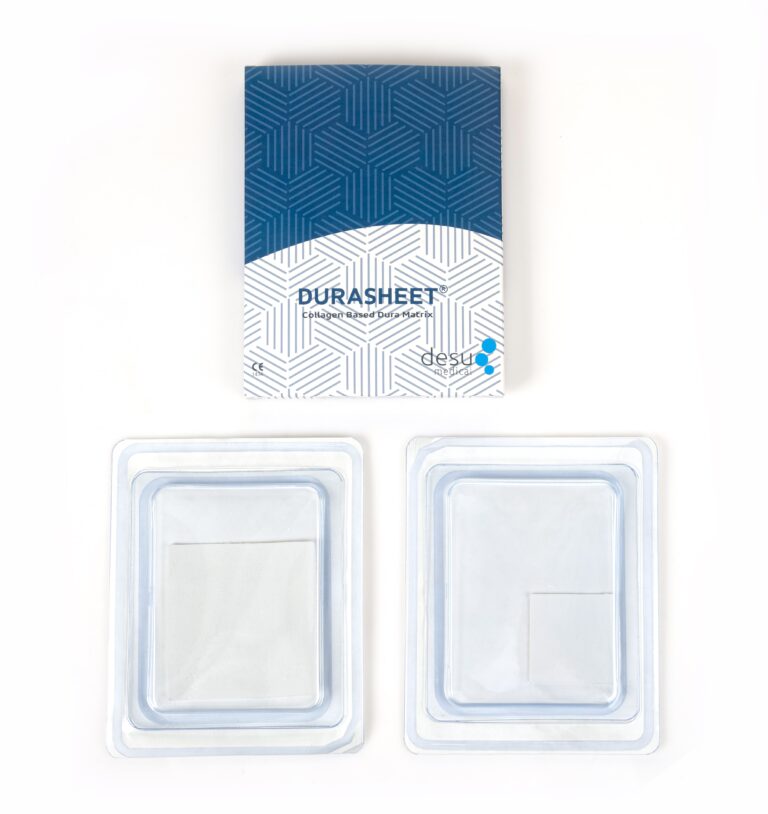
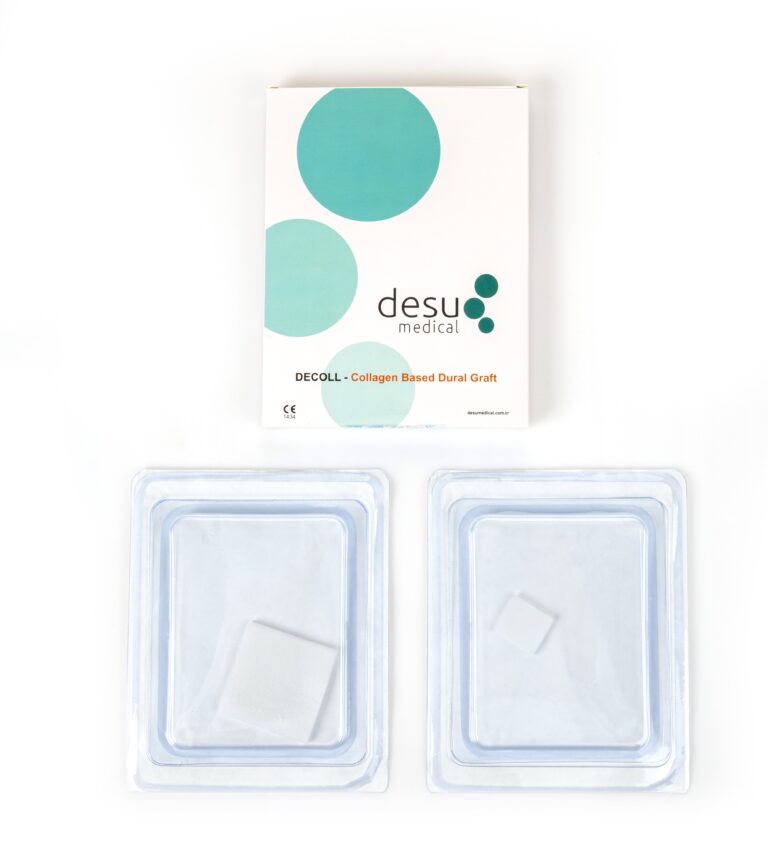
Dural substitutes fall into two broad groups: natural materials based on collagen or tissue, and synthetic polymers. DESU’s DURASHEET and DECOLL belong to the first group. Each is made from natural, pure Type I bovine collagen, not from synthetic polymers, and is resorbed as host tissue forms rather than remaining as a permanent foreign body.
Stage 1: Controlled Raw Material
The quality of a collagen dura membrane starts with the raw material. Collagen of bovine origin must come from controlled sources with documented origin. European requirements for devices made with animal tissue, including Regulation (EU) 722/2012 and the ISO 22442 series of standards, set out how the source animals, their geographical origin and the collection of tissue are controlled to manage risks such as transmissible spongiform encephalopathies. These principles are discussed in our article on bovine collagen safety.
Stage 2: Purification
Raw tissue contains many components besides collagen, including other proteins, lipids and cells. Purification steps remove these components and leave purified Type I collagen. Purification is important for biocompatibility, because the aim is a material that integrates with host tissue without provoking unnecessary inflammation. Validated steps for the reduction of viruses and other agents are also part of processing for materials of animal origin.
Stage 3: Forming the Membrane
The purified collagen is then formed into a sheet with a defined structure. The structure determines how the membrane handles and how it behaves in the body. DESU’s membranes are designed with an impermeable pore structure intended to act as a barrier against cerebrospinal fluid, while the collagen can still be remodeled into the patient’s own tissue. The membranes are then cut into standard sizes: DURASHEET and DECOLL are each produced in four sizes, listed on their product pages.
Stage 4: Packaging and Sterilisation
Each collagen dura membrane is packed in a sterile barrier system and then sterilized. DESU’s dura membranes are gamma sterilized and supplied sterile, ready for use in the operating room. Sterilization is validated to show that it reliably achieves sterility. See our article on gamma sterilization of collagen dura membranes for more information.
Stage 5: Testing and Release
Before a lot is released, it is checked against its specifications. Product-level testing typically covers physical properties, packaging integrity and sterility assurance. The biological safety of an implantable collagen device is evaluated within the framework of the ISO 10993 series, as described in our article on dural graft biocompatibility.
The Quality Management System
All of these stages take place within a quality management system. DESU’s system is certified to ISO 13485, the international standard for medical device quality management. It covers design control, supplier control, production, documentation, traceability, handling of complaints and corrective actions. Each collagen dura membrane carries a lot number that links it to its production records, as explained in our guide to dural graft traceability.
CE Marking
A collagen dura membrane of animal origin is a high-risk device in Europe. Before it can carry the CE mark, the manufacturer’s technical documentation, clinical evaluation and quality system are assessed by a notified body. DESU’s DURASHEET and DECOLL membranes carry the CE mark. Our article on EU MDR requirements for dural grafts describes this process.
About DESU
DESU was founded in 2007 as an R&D company at Hacettepe Teknokent in Ankara, Türkiye, and designs and manufactures neurosurgical products in its own cleanrooms, including collagen dura membranes, hydrocephalus shunt systems and drainage catheters. Its collagen dura membranes are supplied ready to use, with no pre-treatment, and can be cut to the size of the defect in the operating room.
Summary
Making a collagen dura membrane involves controlled sourcing of natural bovine collagen, purification, forming a membrane with a defined structure, sterile packaging, gamma sterilisation and lot-by-lot release, all within a certified quality system and a European regulatory framework. These steps are what allow a natural material to be used safely as an implant in contact with the brain and spinal cord.
Talk to a DESU Product Specialist
Hospital teams and distributors who want to review the technical documentation, sizes or samples of DURASHEET and DECOLL can contact DESU’s product specialists at sales@desu.tr or through the contact page, or request a quote.
Kaynaklar
- Commission Regulation (EU) No 722/2012 on devices manufactured utilising tissues of animal origin
- ISO 13485:2016 Medical devices — Quality management systems
- ISO 22442 series: Medical devices utilizing animal tissues and their derivatives
Bu konuda uzmanımızla görüşün
Ürün seçimi, teknik özellikler, numune talebi veya distribütörlük başvurusu için ekibimize doğrudan ulaşabilirsiniz.
Yorumlar
Henüz yorum yok. İlk yorumu siz yazın.